
People ask us all the time whether CB radios and two-way radios are the same thing. The short answer is that every CB is a two-way radio, but not every two-way radio is a CB. CB is one specific public radio service on 27 MHz that anyone can use with no license. Two-way radio is the much broader category, and it includes the private, licensed systems that businesses, schools and public safety agencies run on.
The difference matters because the two are built for different jobs. CB is an open party line for the road. A business two-way radio system is a private network for your team. Here is how they compare and how to tell which one fits.
CB Radio vs Two-Way Radio at a Glance
| CB radio | Business two-way radio | |
|---|---|---|
| Frequency | 27 MHz (HF) | VHF 136 to 174 MHz or UHF 400 to 512 MHz |
| Channels | 40 shared public channels | Private frequencies licensed to your organization |
| License | None required | FCC Part 90 license for business use |
| Power | 4 watts AM, 12 watts PEP on SSB | Typically 2 to 5 watts handheld, up to 50 watts or more mobile |
| Typical range | A few miles, up to about 15 in open terrain | 1 to 5 miles direct, far wider with repeaters or wide area networks |
| Privacy | None. Anyone on the channel can listen | Private channels, with digital encryption available |
| Audio | Analog AM, plus SSB and FM on some models | Analog or digital, with noise suppression |
| Best for | Truckers, off-roaders, travelers, hobbyists | Businesses, schools, events, construction, public safety |
What Is a CB Radio?
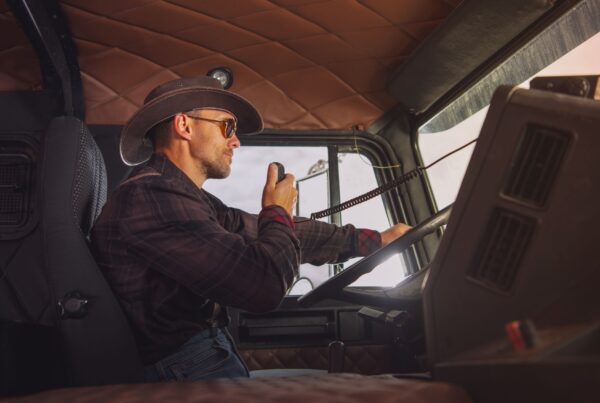
CB stands for Citizens Band. Our post on what CB radio stands for covers the meaning and history. In short, it is a public radio service the FCC created in 1958 that runs on 40 shared channels between 26.965 and 27.405 MHz. Channel 9 is reserved for emergencies, and Channel 19 is the unofficial highway channel truckers use across North America.
Under the FCC’s CB rules in 47 CFR Part 95, no license is required, power is capped at 4 watts on AM and 12 watts PEP on single sideband, and amplifiers are not allowed. Since 2021, the FCC has also allowed FM on CB.
The strength of CB is that it is open. Every driver on Channel 19 hears traffic and weather reports from the trucks ahead, with no cell signal and no monthly bill. The weakness is the same thing: anyone can listen, channels get crowded, and there is no way to keep a conversation private or reserve a channel for your crew.
Who uses CB: long haul and regional truckers, off-roaders and overlanders, RV travelers, farmers and hobbyists. If that’s you, our CB radio buying guide and list of the best CB radios for truckers are good next reads.
What Is a Two-Way Radio?
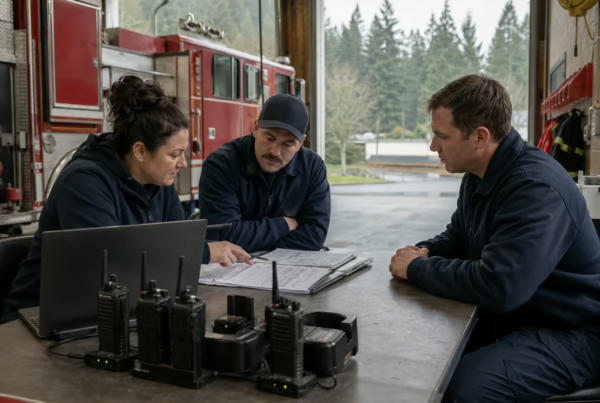
“Two-way radio” covers any radio that can both send and receive. That ranges from a pair of consumer walkie-talkies to the systems police departments run countywide. In a business setting, it usually means professional radios on VHF or UHF frequencies, licensed to your organization under FCC Part 90.
Not every two-way radio needs a license. Consumer FRS radios are license free, and GMRS needs a simple personal license. The FCC’s guide to personal radio services explains those options, and our FRS vs GMRS comparison covers where each one fits. For a business with a team to coordinate, though, a licensed system gives you frequencies that are yours, coverage designed around your site, and features consumer radios do not have.
What professional two-way radios add:
- Private channels and talk groups, so the warehouse, the yard and the office each hear only what they need
- Digital audio that stays clear at the edge of coverage, with background noise filtered out
- Encryption on digital systems, for teams that handle sensitive information
- GPS location, man-down and emergency buttons for lone workers and field crews, covered in our post on radios with GPS and emergency alerts
- Expandable range through repeaters and wide area networks
Who uses professional two-way radio: businesses, schools, hospitals, construction crews, event teams, utilities, and police and fire departments.
Range: Why the Numbers Are So Different
A CB radio talks directly to other radios, so its range depends on power, antenna and terrain. In the real world that means a few miles, sometimes up to about 15 in open country. A good antenna matters more than the radio itself, which our CB antenna guide explains.
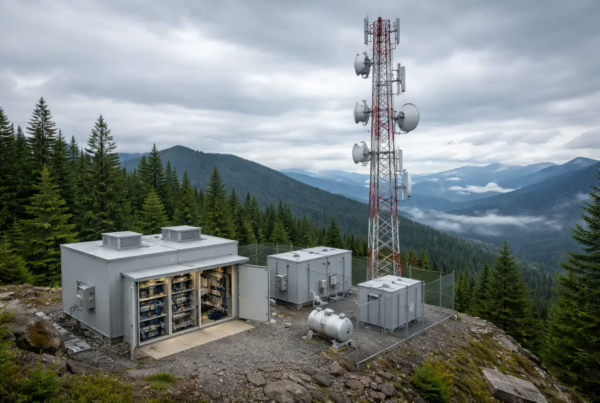
A handheld business radio on its own covers a similar distance, usually 1 to 5 miles depending on buildings and terrain. The difference is what you can add. A repeater on a hilltop or rooftop can stretch that to 20 miles or more. Trunked radio systems and wide area networks like FleetNet link multiple sites so a crew can talk across a county or a region. And LTE push-to-talk radios run over cellular networks for statewide or nationwide coverage, with no towers to build.
CB has no equivalent upgrade path. Its range is set by physics and FCC power limits.
Licensing and Cost
CB is the cheaper option up front. You buy the radio and antenna, install them, and you are on the air, with no license and no fees.
A business radio system costs more because you are paying for private frequencies and coverage designed around your operation. A Part 90 license typically runs a few hundred dollars for a simple single-channel setup and lasts 10 years. Our guide on whether you need a license for a two-way radio walks through each step. For LTE radios there is no license, but there is a monthly service plan, which our breakdown of LTE two-way radio costs covers.
Can You Use Both?
Many fleets do. A trucking or logistics company might keep a CB in every cab so drivers hear highway traffic and road conditions on Channel 19. The same company runs a private business radio or LTE push-to-talk system for dispatch, so instructions reach the right driver without broadcasting to the whole interstate. The two tools are complementary rather than competing. Our guide to two-way radios for transportation and logistics fleets shows how that setup works.
So Which One Do You Need?
Choose CB if you are an individual driver or traveler who wants open, free, local communication on the road. CB is a good fit for truckers, off-road convoys and anyone who wants a backup when cell service drops.
Choose a professional two-way radio system if you are running a team. If you need to reach specific people, keep conversations private, cover a large site or multiple locations, or meet safety requirements, a licensed system is the right tool. If you are weighing consumer walkie-talkies against professional radios, our post on walkie-talkies vs two-way radios covers that decision.
Get the Right Radio From Whisler Communications
Whisler Communications has supported businesses, agencies and drivers across the Pacific Northwest since 1959. We carry CB radios along with professional radios from Kenwood and Icom, plus FirstNet-ready LTE radios. We license, program, install and support everything we sell. That includes handheld radios for a single crew, repeaters and full wide area systems.
Not sure which setup fits your operation? Contact us and we will help you find a system that fits your needs and your budget.