Transportation and logistics operations run on communication. A driver who cannot reach dispatch during a route change, a dock team that cannot coordinate with an inbound truck, or a warehouse supervisor who cannot reach a forklift operator creates delays that compound across an entire operation. The communication tool that handles this most reliably in 2026 is the same one that has handled it for decades: two-way radio.
Cell phones create friction in logistics environments. They require dialling, they drop calls in rural areas, they invite distraction, and they are restricted for commercial vehicle drivers under FMCSA regulations that prohibit hand-held mobile phone use while driving. Two-way radios with push-to-talk operation are explicitly permitted under those same regulations, making them the compliant, practical standard for fleet communication.
This guide covers what transportation and logistics operations in Washington State need from a radio system, how to match the right solution to your fleet size and operational footprint, and what Whisler Communications provides to fleet operators across Southwest Washington.
The Communication Challenges Specific to Transportation and Logistics
Geographic Coverage Across Washington’s Varied Terrain
Washington State presents real coverage challenges for fleet operators. The I-5 corridor between Olympia and Tacoma is dense and well-covered. Routes heading west into Grays Harbor County, south into Lewis County, or east toward the Cascades quickly move into terrain where cellular coverage is inconsistent. A transportation company running deliveries across multiple Southwest Washington counties cannot rely on cell-dependent communication tools for drivers in those areas.
Conventional portable radio systems also have range limitations. A handheld radio with a single repeater cannot reliably cover a driver operating 40 miles from base. Multi-county logistics operations need a communication solution that matches their actual operational footprint. See our post on wide area digital radio networks for how wide area trunked infrastructure addresses this.
FMCSA Compliance
The Federal Motor Carrier Safety Administration prohibits commercial motor vehicle drivers from using hand-held mobile phones while driving. Violations carry civil penalties and can affect a carrier’s safety rating. Two-way radios with single-button push-to-talk operation are explicitly permitted and are the standard compliant communication tool for commercial drivers.
For fleet operators equipping drivers, vehicle-mounted mobile radios with hands-free operation represent the safest and most compliant setup. Push-to-talk over cellular radios like Diga-Talk+ also meet FMCSA requirements when operated as a PTT device rather than a hand-held phone.
Connecting Drivers, Dispatch, and Warehouse Teams
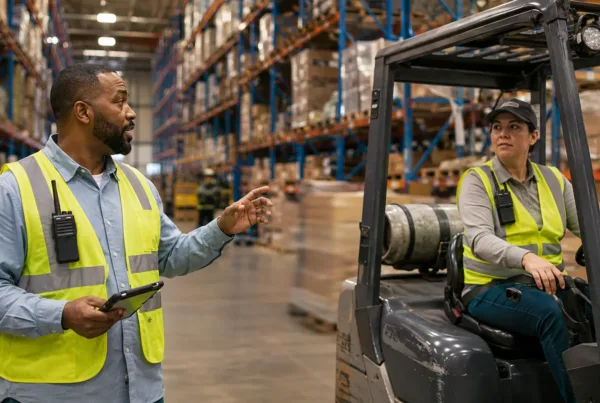
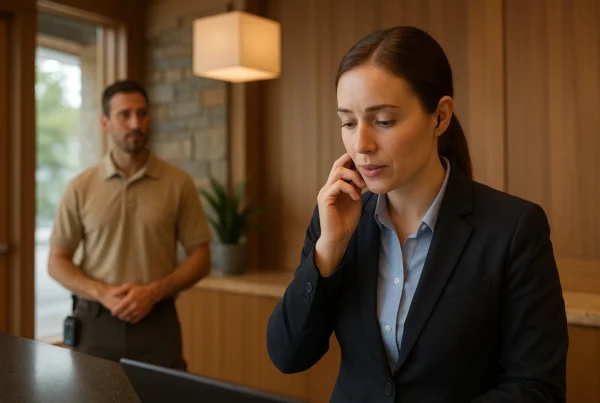
A logistics operation typically involves three distinct communication environments that all need to connect to each other: drivers on the road across a wide geographic area, dispatch coordinating routes and schedules from a central location, and warehouse or dock teams managing receiving, loading, and outbound logistics within a facility.
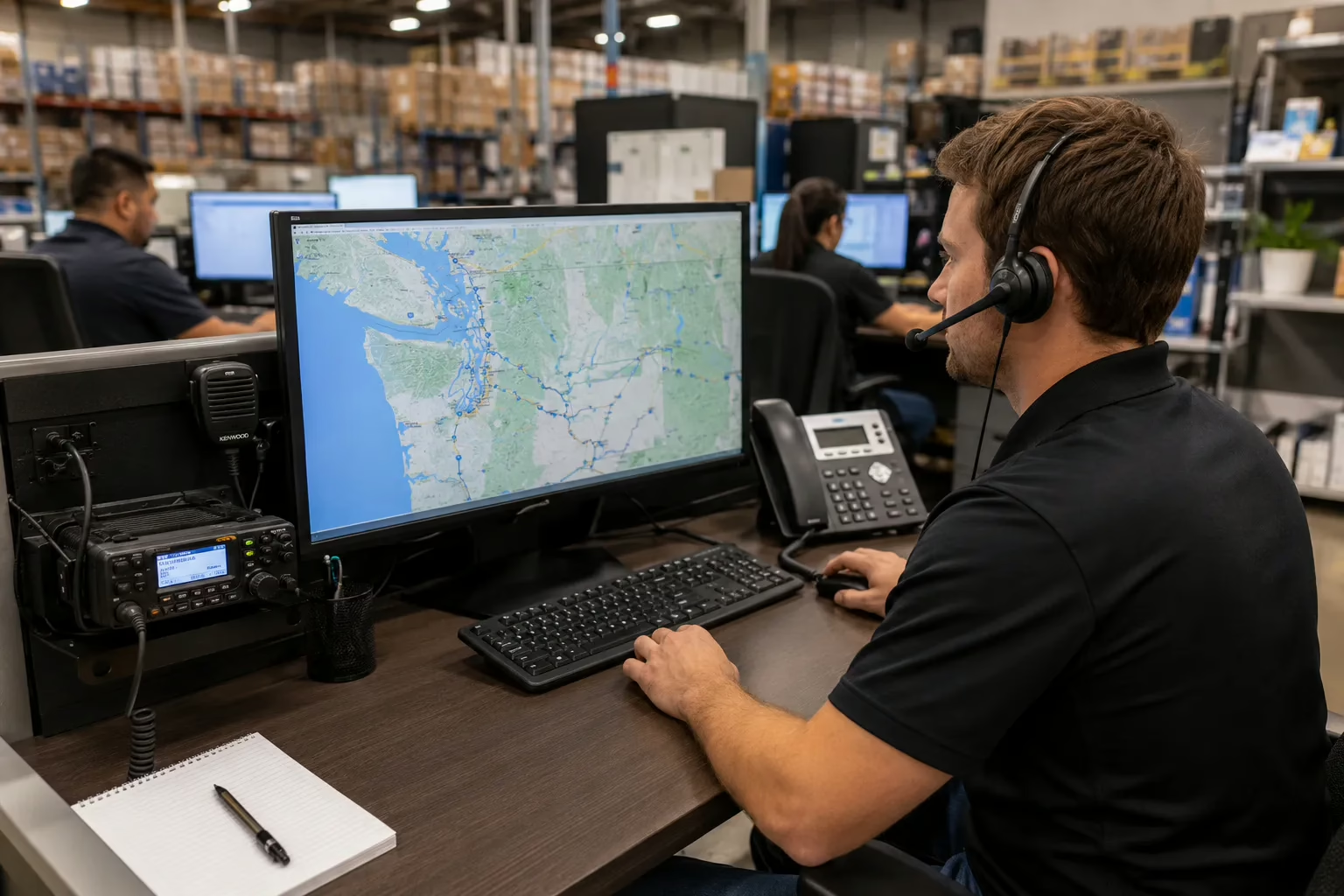
These three environments have different radio requirements. Drivers need mobile radios or LTE PTT devices that work across large distances. Dispatch needs a base station or dispatch console with visibility across all active units. Warehouse teams need portable radios suited to indoor environments with good building penetration. A well-designed system connects all three into a coherent talk group structure where the right people can reach each other without unnecessary channel congestion.
Durability in Commercial Environments
Logistics and transportation environments are hard on equipment. Radios get dropped on concrete dock floors, exposed to rain and weather during loading operations, subjected to vibration in vehicle cabs, and handled across multiple shifts by staff who are not focused on protecting the equipment. Radios selected for logistics use need MIL-STD-810 certification and IP-rated water and dust resistance as baseline specifications. Battery life across full shifts is equally important. A radio that dies four hours into a 10-hour shift is not a radio the operation can depend on.
Radio Options for Transportation and Logistics in Washington
Vehicle-Mounted Mobile Radios for Drivers
For long-haul and regional drivers, a vehicle-mounted mobile radio is the most reliable communication option. Mobile radios operate at 25 to 50 watts of transmit power, significantly more than a handheld portable, which translates directly to greater range and more reliable coverage across rural terrain. They are powered by the vehicle’s electrical system and do not have battery life concerns. A properly installed mobile radio with a roof-mounted antenna will outperform any handheld in open terrain.
Motorola mobile radios are the most widely deployed vehicle radio in commercial fleet applications in the Pacific Northwest. The MOTOTRBO series provides digital audio quality, GPS capability, and the durability that long-haul and regional delivery operations require. Kenwood mobile radios offer comparable performance with strong NXDN and DMR digital support for fleets that need multi-protocol capability.
Push-to-Talk Over Cellular for Wide-Area Fleets
For fleets that operate across multiple states or in areas where conventional radio infrastructure does not reach, Diga-Talk+ push-to-talk over cellular provides nationwide PTT coverage over 4G LTE networks. Drivers communicate with dispatch and other fleet members the same way they would on a conventional radio, with instant push-to-talk, but the coverage footprint is the entire cellular network rather than a local radio system.
Diga-Talk+ is particularly relevant for Washington fleets that operate across state lines into Oregon, Idaho, or California, or for operations running routes through areas where the FleetNet trunked network coverage does not extend. The Diga-Talk 9850 is the vehicle-mount LTE radio most commonly deployed for fleet applications, providing GPS tracking, rugged construction, and a clear display suited to cab installation.
FleetNet for Multi-County Washington Operations
For fleet operators whose routes stay within Washington State and the Pacific Northwest, FleetNet provides wide area trunked radio coverage across the region through mountaintop RF infrastructure. FleetNet gives a Washington fleet operator the coverage of a wide area radio network without building private tower infrastructure. Drivers on rural routes in Lewis County, Grays Harbor County, or Mason County stay connected to dispatch through the same network as drivers on the I-5 corridor.
FleetNet also supports talk group configuration that allows a logistics company to maintain separate channels for drivers, warehouse, and dispatch while keeping all three groups connected through the same system. For a closer look at how FleetNet supports regional operations, see our post on wide area radio networks for businesses.
Portable Radios for Warehouse and Dock Teams
Warehouse and dock operations need portable radios that perform well in indoor environments with concrete construction, steel racking, and the noise of forklifts, conveyor systems, and loading equipment. UHF frequencies penetrate building materials more effectively than VHF and are the standard for warehouse radio deployments. Digital radios provide clearer audio in high-noise environments and support the talk group separation that a busy distribution centre needs.
The Kenwood NX-3000 Series provides multi-protocol digital support in a rugged, IP-rated housing suited to warehouse conditions. For operations that need GPS tracking on dock and yard staff as well as drivers, GPS-enabled portables connect into the same system as vehicle-mounted units, giving dispatch a single view of the entire operation.
For more detail on the features that matter for warehouse and logistics radio deployments, our post on two-way radios with GPS and emergency alerts covers GPS tracking, lone worker monitoring, and emergency alert features in detail.
Designing a System Around Your Fleet
The right radio system for a 12-vehicle regional delivery fleet is different from the right system for a 60-vehicle multi-county logistics operation. Key questions that determine the appropriate system design are:
How large is the operational footprint? Routes that stay within 30 miles of a central dispatch point can be served by a conventional repeater-based system. Routes spanning multiple counties need FleetNet or LTE coverage.
How many distinct teams need to communicate? A simple driver-dispatch setup needs two channels. A full logistics operation with drivers, dock teams, warehouse staff, and management needs a structured talk group plan.
Do drivers cross state lines? If yes, LTE push-to-talk is the most practical coverage solution. Conventional radio infrastructure stops at the coverage boundary of local repeaters.
What are the FCC licensing requirements? Vehicle-mounted commercial radios operating on licensed VHF or UHF frequencies require an FCC Part 90 license. Whisler Communications handles license applications and frequency coordination for fleet operators across our service area. Diga-Talk+ LTE radios operate on cellular networks and do not require a separate radio license.
What is the current state of the system? If your operation is running aging analog equipment with coverage problems or battery issues, our post on signs it is time to upgrade your radio system walks through the indicators that a system refresh is overdue.
Whisler Communications for Washington Fleet Operators
Whisler Communications has supported transportation and logistics fleets across Southwest Washington since 1959. We handle system design, vehicle radio installation, FCC licensing, programming, and ongoing support for fleet operators in Thurston, Pierce, Mason, Lewis, Grays Harbor, Kitsap, and Clark counties.
Whether you are equipping a small regional delivery fleet, designing a multi-site logistics communication system, or replacing aging equipment that is no longer serving your operation, we can help you work through the options and get the right system in place.
Contact Whisler Communications to discuss radio options for your fleet.