
Most two-way radio systems are built to last. A well-maintained radio can run reliably for ten years or more, which is part of what makes two-way radio such a cost-effective communication tool for businesses and public safety agencies. But that longevity can also work against you. Teams hold onto aging equipment long past the point where it is serving them well, accepting degraded performance as normal when a modern system would solve the problem outright.
Here are five signs that your current radio system is holding your team back, and what the upgrade path looks like for each one.
1. Your Radios Are Dropping Out or Producing Static Regularly
Occasional interference is normal. Consistent dropouts, static on clear days, or radios that cut out in the same locations every time are not. If your team has started working around coverage gaps, speaking louder into the mic, or repeating themselves regularly, the problem is real and it is costing you time on every shift.
The most common causes are aging hardware with degraded receiver sensitivity, antenna wear or damage, and analog systems that are simply out of their operational depth in environments that have changed since the system was originally installed, whether that is new buildings, expanded sites, or more dense RF environments.
Modern digital radios handle noise and interference significantly better than analog equivalents. Where an old analog radio produces static as signal degrades, a digital radio maintains clean audio until the signal drops below a usable threshold. For teams operating across large sites or between buildings, pairing upgraded radios with a wide area network solution or repeater infrastructure can eliminate coverage gaps entirely rather than working around them.
2. Battery Life Is Unreliable Across the Shift
Battery degradation is gradual enough that most teams do not notice it happening until it becomes a serious problem. If your team is swapping batteries mid-shift, charging units overnight and still starting the day with less than full capacity, or carrying spares as a matter of routine, the batteries are past their service life.
Lithium-ion batteries in two-way radios typically have a practical lifespan of two to four years under regular use. Beyond that, capacity drops off and the radio becomes unreliable for full-shift use. The fix is sometimes as simple as a battery replacement, but if the radio body is also aging, it is usually more cost-effective to upgrade the entire unit and get the benefit of improved power management, faster charging, and better runtime that comes with current generation hardware.
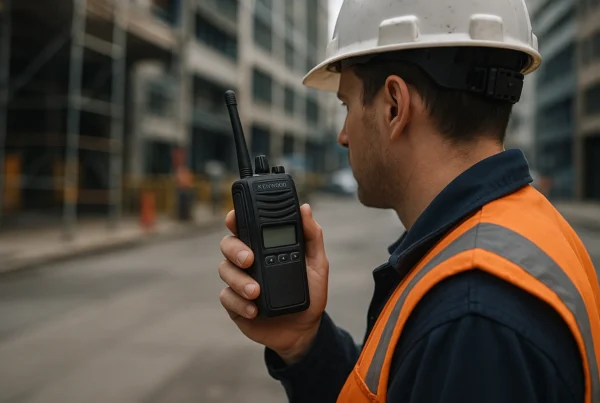
For operations that cannot tolerate downtime, modern radios like the Kenwood NX Series support rapid charge and hot-swap battery packs that keep radios operational through shift changes without charging gaps.
3. Your System Lacks Features Your Operation Now Requires
Radio technology has moved considerably in the last decade. If your current system predates digital protocols, GPS integration, or encrypted communication, you are likely missing capabilities that would materially improve how your team operates.
The features that most often prompt an upgrade conversation with our clients are:
GPS and location tracking. For fleets, field crews, and lone workers operating across wide areas, GPS-enabled radios provide real-time location visibility that analog systems cannot. This is particularly relevant for logistics and transport operations and for workplace safety compliance under OSHA lone worker requirements.
Man-down and emergency alerts. For public safety agencies, construction crews, and any team with workers in hazardous environments, man-down detection and one-button emergency alerts are now standard features on professional digital radios. If your current system does not have them, that is a safety gap worth addressing. Our post on two-way radios for workplace safety covers these features in detail.
Encryption. For healthcare facilities, law enforcement, and organisations handling sensitive communications, unencrypted analog radio transmissions are a liability. Digital radios support AES encryption that keeps communications private.
Interoperability. If your organisation needs to communicate with other agencies or contractors running different radio systems, an older single-protocol radio cannot bridge that gap. Multi-protocol radios like the Kenwood NX-5000 Series or the Viking VP8000 support NXDN, DMR, P25, and analog FM in a single device, making interoperability a non-issue.
FirstNet compatibility. For public safety agencies and organisations that work alongside first responders, FirstNet-ready radios provide priority network access that keeps critical communications working when commercial networks are congested during incidents.
4. Your Coverage Area Has Grown Beyond What the System Was Designed For
A radio system designed for a single warehouse, one job site, or a single-campus school district may not scale cleanly to cover a fleet operating across three counties, a school district that has added buildings, or a business that has expanded to multiple locations.
Coverage problems from growth look similar to hardware degradation problems: dropouts in certain areas, weak signal at the edges of the site, and staff working around the gaps. The difference is that a hardware upgrade alone will not fix a coverage problem caused by range. That requires a system design conversation.
For teams that have outgrown a conventional radio system, the options are a repeater installation to extend range, a FleetNet wide area trunked network that covers large geographic areas across the Pacific Northwest, or a push-to-talk over cellular solution for operations that span beyond the coverage of a traditional radio network. Each has different cost profiles and operational tradeoffs worth understanding before committing to an upgrade path.
5. Maintenance and Repair Costs Are Climbing
Older radio systems become increasingly expensive to maintain. Replacement parts for discontinued models become scarce. Repair turnaround times lengthen as technicians with experience on legacy hardware become harder to find. Batteries, antennas, and accessories for older models are no longer stocked locally and have to be sourced and shipped.
If your organisation is spending time and money keeping an aging fleet operational, it is worth running a simple cost comparison. Add up what you have spent on repairs, parts, and downtime over the last 12 months and compare that against the cost of replacing the fleet with current hardware that comes with warranty coverage and readily available local support.
In most cases we see, the break-even point is faster than clients expect, particularly when you factor in the productivity and safety improvements that come with a modern system. Our post on two-way radio maintenance and lifespan covers how to assess whether repair or replacement makes more sense for your specific equipment.
What the Upgrade Process Looks Like
An upgrade does not have to mean replacing everything at once. Whisler Communications works with organisations to assess what is underperforming, identify whether the issue is hardware, coverage, or system design, and build an upgrade path that fits your budget and operational timeline.
For some clients that means a staged hardware refresh. For others it means a full system redesign with new infrastructure. For some it means adding a wide area network layer on top of an existing system that is otherwise performing well.
If you recognise any of the signs above in your current setup, the right first step is a conversation about what is actually driving the problem before committing to a solution.
Contact Whisler Communications to talk through your current system. We serve businesses and public safety agencies across Thurston, Pierce, Mason, Lewis, Grays Harbor, Kitsap, and Clark counties from our Olympia office.