
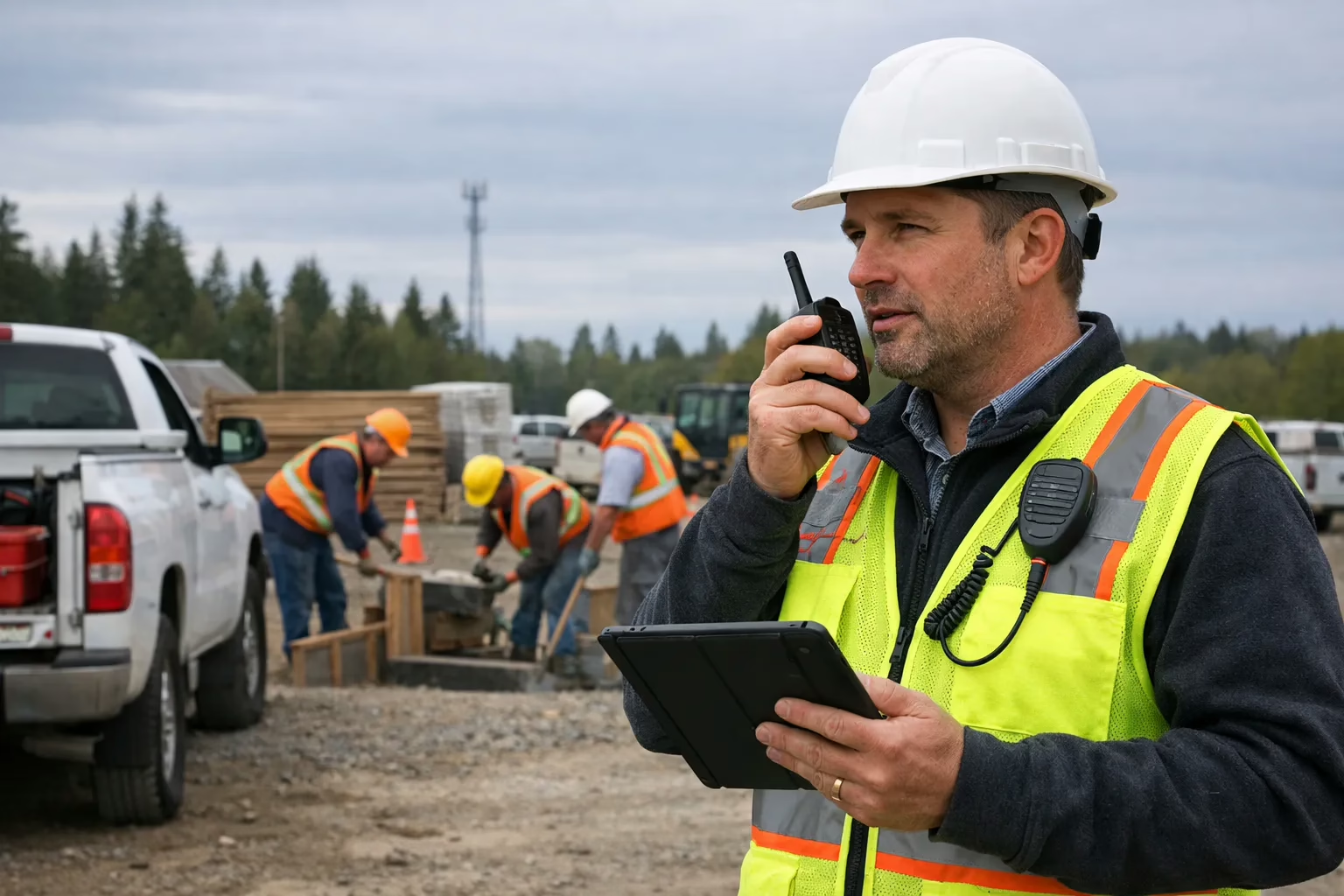
Construction radio systems · Western Washington
Two Way Radios for Construction Sites
We set up two way radio systems for contractors and construction companies across Western Washington. Coverage that reaches every floor and every corner of the site, talk groups for each trade, and a local team to support it until the job is done.
Family owned since 1959Based in Olympia, Washington
One team, start to finishPlanning, installation, programming and repairs
Radios built for the workKenwood, Icom, Motorola and Diga-Talk+
A job site is hard on radios. The system makes the difference.
Concrete, rebar and structural steel block radio signals. Stairwells, basements and upper floors of a building under construction turn into dead spots. Add generators, saws and heavy equipment, and a cheap handheld that worked fine in the parking lot stops being useful the moment it matters.
We plan coverage around your site, not around a spec sheet. That can mean the right frequency band for steel and concrete, a repeater placed to cover a multi-story build, separate talk groups so the crane crew isn't buried under delivery chatter, and emergency features programmed so a call for help reaches the right people with a location attached.
Comparing models? Our guide to the best two way radios for construction in 2026 covers specific portables and mobiles, and our job site radio etiquette guide helps crews use them well.
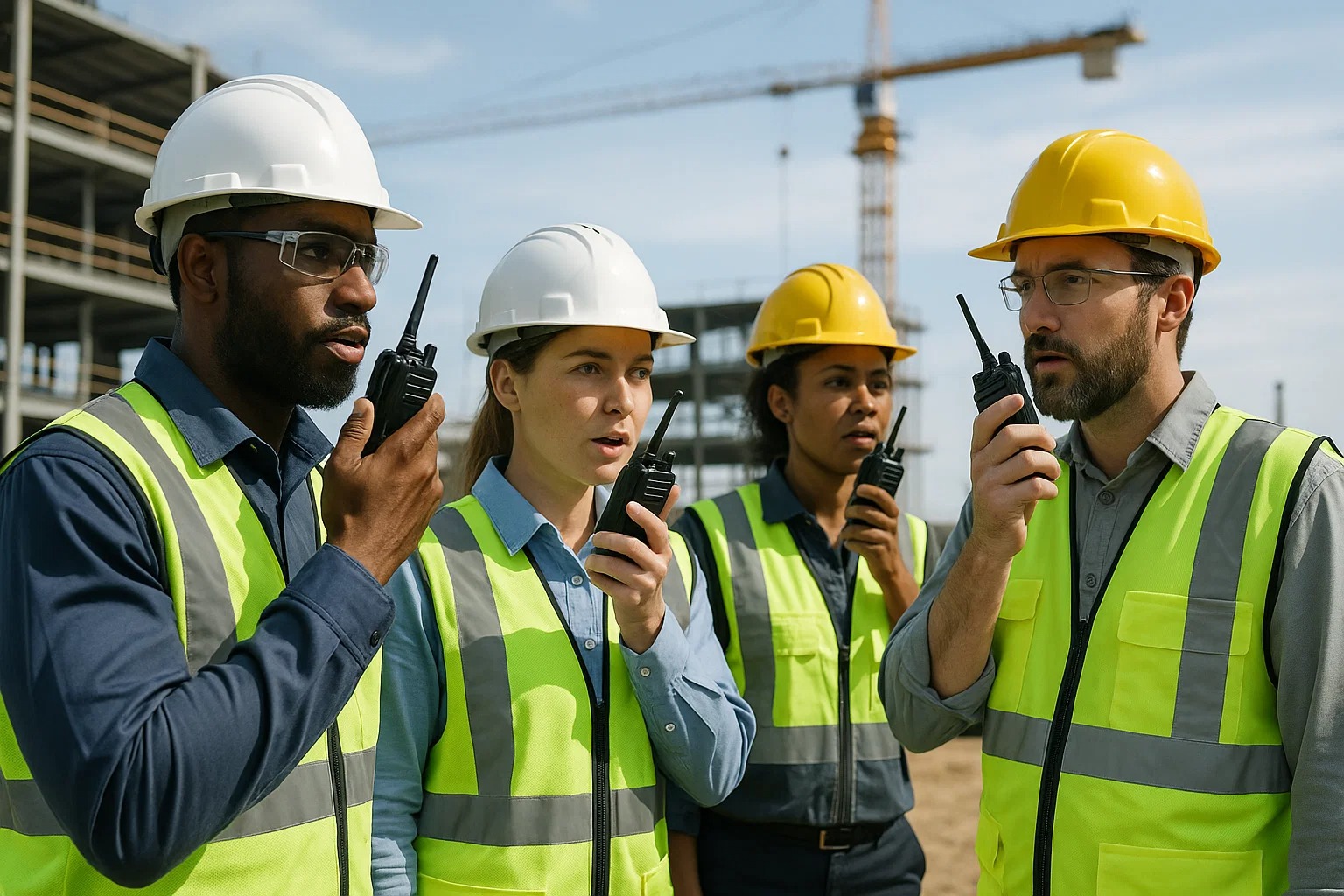
What we set up for construction companies
Most contractors need a mix of these, sized to the project and the crew.
Jobsite coverage planning
Multi-story builds, below-grade work and large spread-out sites. We work out the band, antennas and repeater placement so every floor and corner stays connected.
Talk groups by trade
Supers, crane and rigging, safety, deliveries and subs each get their own group, with an all-call when the whole site needs to hear it.
Vehicle and equipment radios
Mobile radios installed in pickups, service trucks and equipment cabs, so foremen and operators stay on the same system as the crew on foot.
Crews across several sites
When you run projects in different towns, a wide area network keeps every site, truck and yard on one system without depending on cell coverage.
Supervisors on the road
Project managers moving between distant jobs can carry LTE push-to-talk radios that reach the crew from anywhere with cell signal.
Safety features that work
Emergency buttons, man-down and lone worker alerts, and GPS location, programmed and tested so an alert actually reaches a supervisor.
What a construction radio system has to handle
Concrete and steel
Frequency choice, antennas and repeaters planned so signals get through structure, stairwells and lower levels.
Noise
Digital audio and noise-reducing accessories so messages come through over saws, compressors and equipment.
Rain, dust and drops
Rugged, weather-resistant radios and accessories chosen for Pacific Northwest job sites, not office use.
A full shift
Batteries and chargers sized so radios last the day, with spares and gang chargers for larger crews.
Emergencies
Alerts with GPS location and an all-call channel, so the whole site can be reached at once when it counts.
Licensing
Most construction systems run on licensed business frequencies. We help you get it right. See our FCC rules guide.
Authorized dealer for






Built for every stage of the job
How we set up your job site
Job sites across Western Washington
From Olympia and Lacey to Tacoma, Centralia, Aberdeen and Vancouver, we support contractors from our shop at 2875 RW Johnson Boulevard SW in Olympia. We know the terrain and weather that make coverage tricky around here.
Construction radio questions
Are UHF or VHF radios better for construction sites?
For most building sites, UHF is the better choice because it gets through concrete, steel and enclosed floors more effectively. VHF can carry farther over open ground, so it can suit large civil or road projects. We recommend the band after looking at your site.
Will radios work in a high-rise or below grade?
Handhelds alone often struggle in stairwells, basements and upper floors. A properly placed repeater usually solves it. We plan coverage around the structure so every level stays connected as the building goes up.
Do construction companies need an FCC license?
Most construction radio systems use licensed business frequencies under FCC Part 90. License-free radios exist, but they share crowded channels and offer limited range. Read more in do you need a license for two way radios.
Why use radios instead of cell phones on site?
Radios reach the whole crew with one button, work where cell coverage drops out, and keep emergency calls instant. Phones are one-to-one and slow in a hurry. Our post on radios vs cell phones goes deeper.
Can you add radios as the crew grows?
Yes. We plan systems with room to grow, so adding radios, talk groups or a second site later is a programming job, not a rebuild.
Keep your whole site connected
Tell us about your next project and we'll recommend radios and coverage that fit the site and the crew. Family owned since 1959, right here in Olympia.