

Fleet radio systems · Western Washington
Fleet Radio and Dispatch Systems
We set up two way radio systems for transportation, logistics and service fleets across Western Washington. Drivers, dispatch and the dock on one system, coverage that follows the route, and a local shop to install and support it.
Family owned since 1959Based in Olympia, Washington
One team, start to finishPlanning, vehicle installs, programming and repairs
Radios built for the roadKenwood, Icom, Motorola and Diga-Talk+
Your drivers leave town. Your radios should go with them.
The I-5 corridor between Olympia and Tacoma is easy. Routes out to Grays Harbor, down into Lewis County or up through the Kitsap Peninsula are not. Cell coverage drops, a single repeater runs out of range, and a driver 40 miles from the yard can't reach anyone when something goes wrong.
We match the system to your routes. Local radio for a yard and nearby stops, a wide area network for regional runs, LTE push-to-talk for drivers who leave the state, or a mix of all three with one dispatcher who can reach everyone. Push-to-talk radios also give drivers a hands-free way to stay in touch, since federal rules bar commercial drivers from using hand-held phones while driving.
Researching options? Our guide to two way radios for transportation and logistics fleets covers the choices in depth, and how push-to-talk radios help utility and EMS fleets looks at LTE in the field.

Fleet systems we set up
Most fleets need a mix of these, sized to the routes and the number of vehicles.
Vehicle radios, installed right
Mobile radios mounted in trucks, vans and service vehicles with proper power, antennas and hands-free mics, installed by our own technician.
Wide area coverage for regional routes
A wide area network keeps drivers connected across counties through mountaintop sites, without relying on cell coverage or building your own towers.
LTE push-to-talk for long haul
For routes into Oregon, Idaho and beyond, Diga-Talk+ LTE radios give push-to-talk anywhere with cell signal, statewide or nationwide.
Yard, dock and warehouse radios
Portables for loaders, yard jockeys and warehouse staff, on the same system as the drivers so a trailer is ready before the truck backs in.
GPS location and alerts
GPS-enabled radios show where vehicles and people are, and emergency buttons send an alert with a location straight to dispatch.
Already running a fleet?
We reprogram, repair and expand existing fleet radios, move radios to new vehicles, and tell you honestly when an upgrade makes more sense.
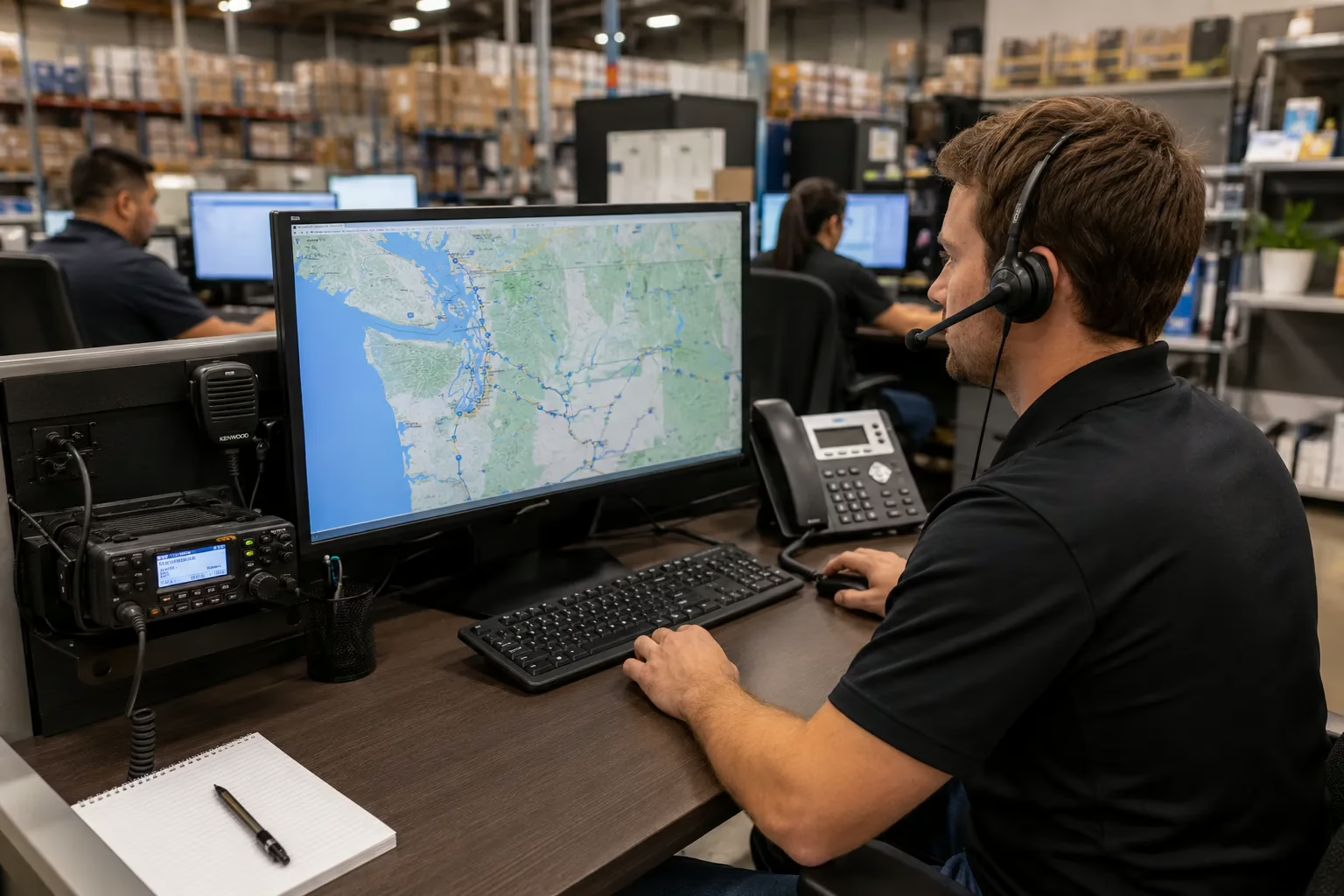
Dispatch that reaches every driver
A fleet radio system is only as good as the person running it. We set up dispatch so one desk can talk to a single driver, a group or the whole fleet, and see where vehicles are while doing it.
- Base stations and desk radios, with antennas placed for range from your yard or office
- Talk groups for drivers, dock and dispatch, plus an all-call for the whole fleet
- PC dispatch and GPS map views for Diga-Talk+ LTE fleets
- Radio and LTE users connected, so long-haul and local drivers share one dispatcher
What a fleet radio system has to handle
Distance and terrain
Hills, forest and coastline that break cell coverage, planned for with the right mix of radio and LTE.
Hands-free driving
Mobile radios with mounted mics and push-to-talk, so drivers stay in touch without picking up a phone.
Driver, dispatch and dock
Three groups with different needs, all on one system that connects them when it matters.
Knowing where everyone is
GPS location on radios and vehicles, so dispatch can route the nearest driver and respond fast.
Life in a vehicle
Clean power, solid antenna mounts and wiring that survives vibration, weather and daily use.
A growing fleet
Systems planned with room to add vehicles, drivers and routes without starting over. Licensing help included, see our FCC rules guide.
Authorized dealer for





Fleets we set up radios for
How we set up your fleet
Fleets across Western Washington
From I-5 to US-101 and US-12, we install and support fleet radios from our shop at 2875 RW Johnson Boulevard SW in Olympia, with vehicle installs handled locally.
Fleet radio questions
Should our fleet use radio or LTE push-to-talk?
Radio suits fleets that stay within a known area and want no monthly cellular cost. LTE suits drivers who travel widely or leave the state. Many fleets use both, connected so one dispatcher reaches everyone.
Can commercial drivers use two way radios while driving?
Federal rules bar commercial drivers from using hand-held mobile phones while driving, but two way radios are treated differently. A vehicle-mounted radio with a fixed mic and push-to-talk is the standard way drivers stay in touch. Check your own company policy and current regulations for specifics.
Can dispatch see where our vehicles are?
Yes, with GPS-enabled radios and the right dispatch setup. Location can show on a map, and emergency alerts include the driver's position. See GPS and emergency alerts.
Do we need an FCC license for fleet radios?
Conventional business radio systems usually need an FCC Part 90 license, which we help with. LTE push-to-talk runs on cellular networks and does not need one. Read more in do you need a license for two way radios.
Can you install radios in the vehicles we already have?
Yes. We install mobile radios in most trucks, vans and service vehicles, and can move existing radios when you replace a vehicle.
Keep every vehicle connected
Tell us about your fleet and routes, and we'll recommend radios and coverage that fit. Family owned since 1959, right here in Olympia.