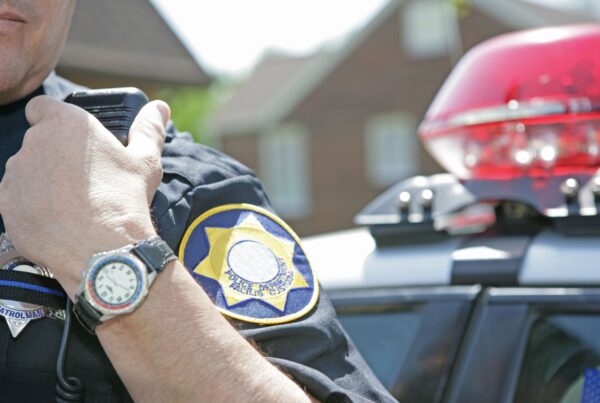
Police and fire departments tend to get most of the attention when public safety communications are discussed, but they are far from the only government teams that depend on reliable radio communication.
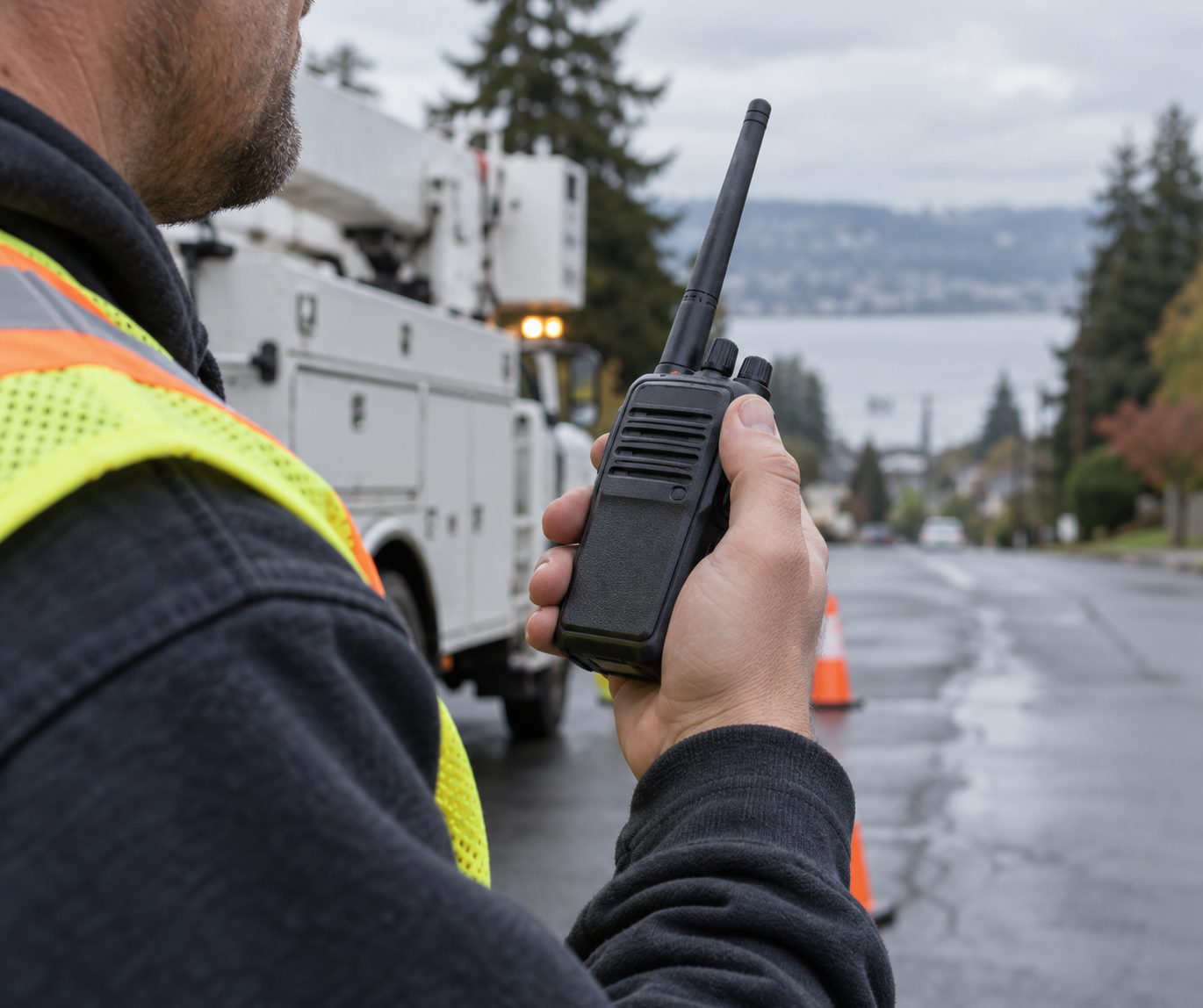
Public works crews, parks and recreation teams, code enforcement officers, animal control, utilities, facilities staff, transportation departments, and other municipal employees often work across large service areas where dependable communication matters every day.
If you manage procurement for a city, county, or municipal department, the question is not simply which radio has the longest range. The bigger question is which system can keep your teams connected across your jurisdiction, withstand daily field use, and coordinate with other departments when an incident crosses agency lines.
Why Government Agencies Have Different Radio Needs
A public works crew repairing a water main, a parks department managing a community event, and an animal control officer responding to a rural call all have different responsibilities, but they share the same basic communications challenge: they need a dependable way to reach their teams wherever the work takes them.
Cell phones and Wi-Fi can be useful, but they are not always the best primary communication tool for field operations. Coverage can vary by location, networks can become congested, and communicating with an entire team may require multiple calls or messages.
A properly designed municipal radio system can provide:
- Fast push-to-talk communication
- Coverage designed around the department’s actual operating area
- Dedicated channels or talkgroups for different teams
- Shared communications during major incidents
- Durable equipment built for daily field use
- Dispatch and vehicle-mounted radio options where needed
The right system should be designed around the geography, infrastructure, staffing, and operational needs of the agency rather than relying on a one-size-fits-all radio package.
Interoperability Across Departments
One of the biggest challenges in municipal communications is not always coverage. It is making sure departments can communicate with each other when they need to.
Public works may normally operate on one channel, parks and recreation on another, and facilities or utilities on another. That separation makes sense during normal operations, but a storm, flood, major public event, road closure, or infrastructure failure can quickly involve several departments at once.
A properly configured wide area digital radio network or trunked radio system can allow departments to operate independently during normal day-to-day work while still giving authorized users access to shared talkgroups when an incident requires coordination.
Planning for interoperability from the beginning is usually much easier than trying to add it after separate departments have already purchased incompatible equipment.
FirstNet, Funding, and Equipment Planning
Some municipal departments may also qualify to use FirstNet as part of its extended public safety community.
FirstNet identifies certain organizations that support emergency response and recovery as Extended Primary users. This can include public works, utilities, transportation, schools, healthcare organizations, and other essential government services.
Primary public safety users such as law enforcement, fire, EMS, emergency management, and 9-1-1 receive the highest priority on the network. During qualifying incidents, Extended Primary users can also be temporarily elevated to receive additional priority and preemption while supporting the response.
For departments that need both traditional land mobile radio and broadband communications, equipment and systems that integrate radio networks with LTE or other broadband services may provide an additional layer of connectivity.
Funding should also be considered early in the procurement process. State and federal grant programs may have specific requirements regarding eligible equipment, technical standards, interoperability, or purchasing procedures. Confirming those requirements before selecting equipment can help avoid delays, rebids, or compatibility problems later.
Licensing and Compliance for Government Radios
Government and municipal radio systems generally fall under FCC Part 90 Private Land Mobile Radio Service rules.
Applications for many new or modified Part 90 radio systems require frequency coordination before being submitted to the FCC, although certain types of applications and frequency assignments may be exempt.
The frequencies available to an agency, the type of system being deployed, transmitter power, repeater locations, and surrounding licensed users can all affect the licensing process.
We have covered the basics in more detail in our guides to FCC regulations for two-way radio use and whether your organization needs an FCC license.
Licensing should be considered before equipment is purchased because the frequencies and system configuration your agency is authorized to use can directly affect which radios, repeaters, and infrastructure are appropriate.
What to Look for When Equipping a Municipal Department
When evaluating two-way radios for a city, county, public works department, or other government agency, consider:
- Coverage across the actual service area: Design around the terrain, buildings, rural areas, and infrastructure your crews encounter rather than relying on advertised radio range.
- Interdepartmental communications: Make sure separate departments can access shared channels or talkgroups when joint operations are required.
- Durability: Field radios should be able to withstand rain, dust, drops, vibration, and daily outdoor use.
- Battery life: Crews working long shifts need radios capable of lasting through the workday without constant recharging.
- Dispatch capability: Larger departments may benefit from centralized dispatch software, desktop control stations, GPS, or fleet management tools.
- Vehicle communications: Public works, utilities, transportation, and field service fleets may need mobile radios installed in trucks and service vehicles.
- FirstNet or broadband integration: Departments that qualify as Extended Primary users may benefit from combining land mobile radio with broadband communications.
- FCC licensing and frequency coordination: Confirm licensing requirements before purchasing equipment or building infrastructure.
- Scalability: Choose a system that can expand as departments, coverage areas, users, or interoperability requirements change.
Building a Radio System Around Your Jurisdiction
There is no single radio system that is right for every municipality.
A small parks department operating within one city may only need a straightforward digital radio system with a repeater. A county public works department covering rural terrain may need multiple repeater sites or a wide-area network. A larger municipality may need separate department talkgroups, dispatch integration, vehicle radios, and shared channels for emergency coordination.
The most important step is understanding how your teams actually communicate before selecting the equipment.
Whisler Communications has worked with organizations throughout the Pacific Northwest for more than 65 years, including agencies and organizations across Thurston, Mason, Lewis, Grays Harbor, Pierce, Kitsap, and Clark counties.
If you are planning radios for an upcoming department budget, system replacement, expansion, or grant application, we can help evaluate your coverage area, interoperability requirements, licensing considerations, and equipment options before you commit to a system.
You can also explore our guidance on radio features for fire departments and two-way radio systems for schools to see how different organizations approach coverage, reliability, and coordinated communications.