An event runs on communication. When a gate opens late, a headliner is ready early, or a medical call comes in from the far side of the grounds, the radio in a coordinator’s hand is what turns a problem into a handled problem. Events are one of the hardest environments to get radio communication right: the deployment is temporary, the crowd is loud, the footprint is large, and multiple teams need to talk without stepping on each other. This guide covers how to choose and deploy two way radios for events so nothing important gets lost in the noise.
If your work is on the lodging and guest service side rather than live production, our companion post on two way radios for hospitality and event management is the better fit. This page is about running the event itself.
Match the system to the event
The right setup depends on the shape of the event. Start here before you count a single radio.
- One day, single indoor space. A conference in a hotel ballroom or a school auditorium usually needs simple portable coverage and clean channel separation, nothing more.
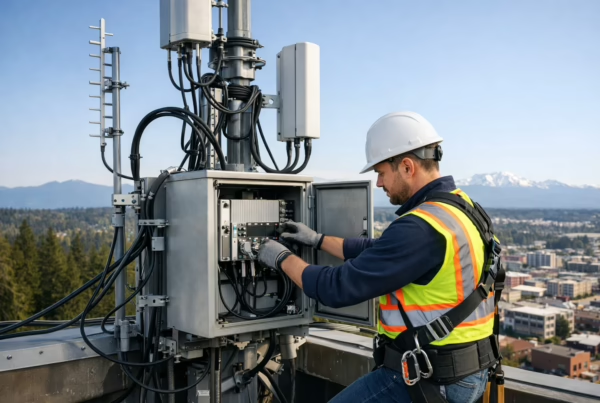
- Multi day or outdoor. A festival, fair, or outdoor concert spreads staff across acres, often with no reliable cell service. Coverage becomes the whole game, and a repeater or a temporary antenna is usually required.
- Large fixed venue. A stadium, arena, or convention center has known dead zones in concourses, loading docks, and basements. These almost always run on an installed system with repeater support rather than handhelds alone.
Getting this call right up front decides everything downstream, from radio count to whether you rent or buy.
Plan channels by team, not by person
The fastest way to make event radios useless is to put everyone on one channel. By mid afternoon it is unusable. Instead, separate traffic into talk groups by function so each team hears only what it needs, with a shared channel for all call coordination. A typical event breaks down into:
- Production and stage management
- Security and crowd control
- Front of house and guest services
- Parking and transportation
- Medical and first aid
- Command, which monitors all groups
Even a mid size event benefits from four to six talk groups. Map them before show day and label every radio to match.
Coverage for large and outdoor venues
Consumer radios almost always fail at scale. Off the shelf FRS and GMRS units share public channels and lack the range to cover a festival ground or reach from a stadium concourse to a rooftop camera position. Our breakdown of FRS and GMRS limits explains why. For real coverage across a large site, a repeater captures weak signals and rebroadcasts them at full strength, closing the dead zones in stairwells, tunnels, and the back of house. Our overview of how repeaters extend range covers the approach.
Crowded events also bring radio frequency congestion, with hundreds of devices, LED walls, and wireless mics competing for the air. A professionally coordinated system on licensed frequencies avoids the interference that derails consumer gear. See our note on preventing signal interference in commercial radio systems for how that is managed.
The gear that matters on show day
A few features separate radios that survive an event from radios that quit at hour six:
- Battery life for a full show day. Target real all day runtime, since a 12 hour load in to load out is normal. Bring spare batteries and a multi unit charger regardless.
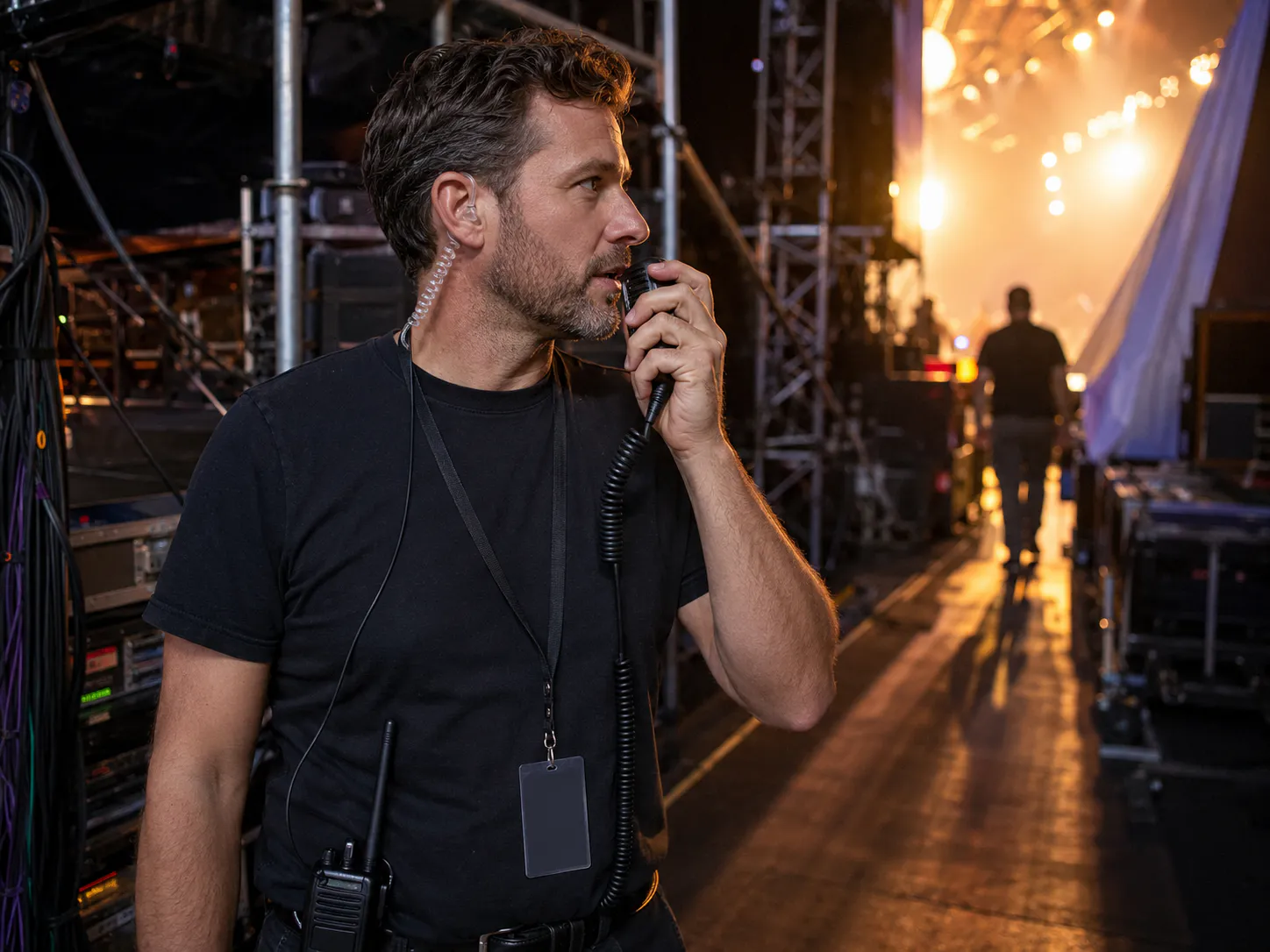
- Surveillance headsets and earpieces. In a loud crowd, a speaker mic is not enough. Discreet earpieces keep communication clear for security and production without broadcasting to guests.
- Rugged build. Radios get dropped, rained on, and packed in road cases. A solid dust and moisture rating pays for itself.
- Simple operation. Temporary staff and volunteers need to pick up a labeled radio and use it with zero training.
Rent or buy?
If you run events regularly, buying makes sense: you control programming, keep a consistent fleet, and avoid repeat rental fees. If you produce one large event a year, or need to scale up suddenly for a single festival, renting a coordinated system with support on site is often the smarter path. Many organizations own a core fleet and rent extra units to cover peak events. Whisler helps regional event teams with both, including programming and channel planning so the system is ready before it arrives.
Licensing for events
Professional event systems typically run on licensed frequencies, which keep your channels private and interference free during a packed day. Licensing is a real step, and for short term or recurring events a dealer can handle it as part of the setup. Our guides on whether you need a license for two way radios and the FCC rules for two way radio use lay out what applies.
Deploying on show day
A smooth event deployment includes radios programmed and labeled by team before they arrive, a simple check out and check in process so every unit is accounted for, spare batteries and radios staged at a central point, and a quick briefing so staff know their channel and basic etiquette. Professional setup of any base or repeater equipment matters too, which our installation guide covers.
Frequently asked questions
How many two way radios does an event need? Count by role, not headcount. Cover production, stage, security, front of house, parking, and medical, then add spares. A small conference might need a dozen radios, while a multi day festival can need well over a hundred across all teams.
Do you need a license to use two way radios at an event? Professional systems usually run on licensed frequencies, which requires an FCC license a dealer can arrange. Consumer FRS radios need no license but rarely provide the coverage or channel separation a real event needs.
What radios work best for outdoor festivals? Rugged digital portables with strong battery life, paired with a repeater for coverage across the grounds. Outdoor events over a large footprint almost always need repeater support to eliminate dead zones.
Should we rent or buy radios for our event? Buy if you run events regularly and want a consistent, programmed fleet. Rent for a one off large event or to scale up for a single peak. Many teams do both.
Plan your event communication
Every event is different, so the right system starts with your footprint, your teams, and your dates. Tell us how large the venue is, how many staff need to talk, and when the event runs, and we will map a system that keeps every team connected. Whisler Communications has supported events and organizations across Washington since 1959. Contact our team for an event radio quote or rental.