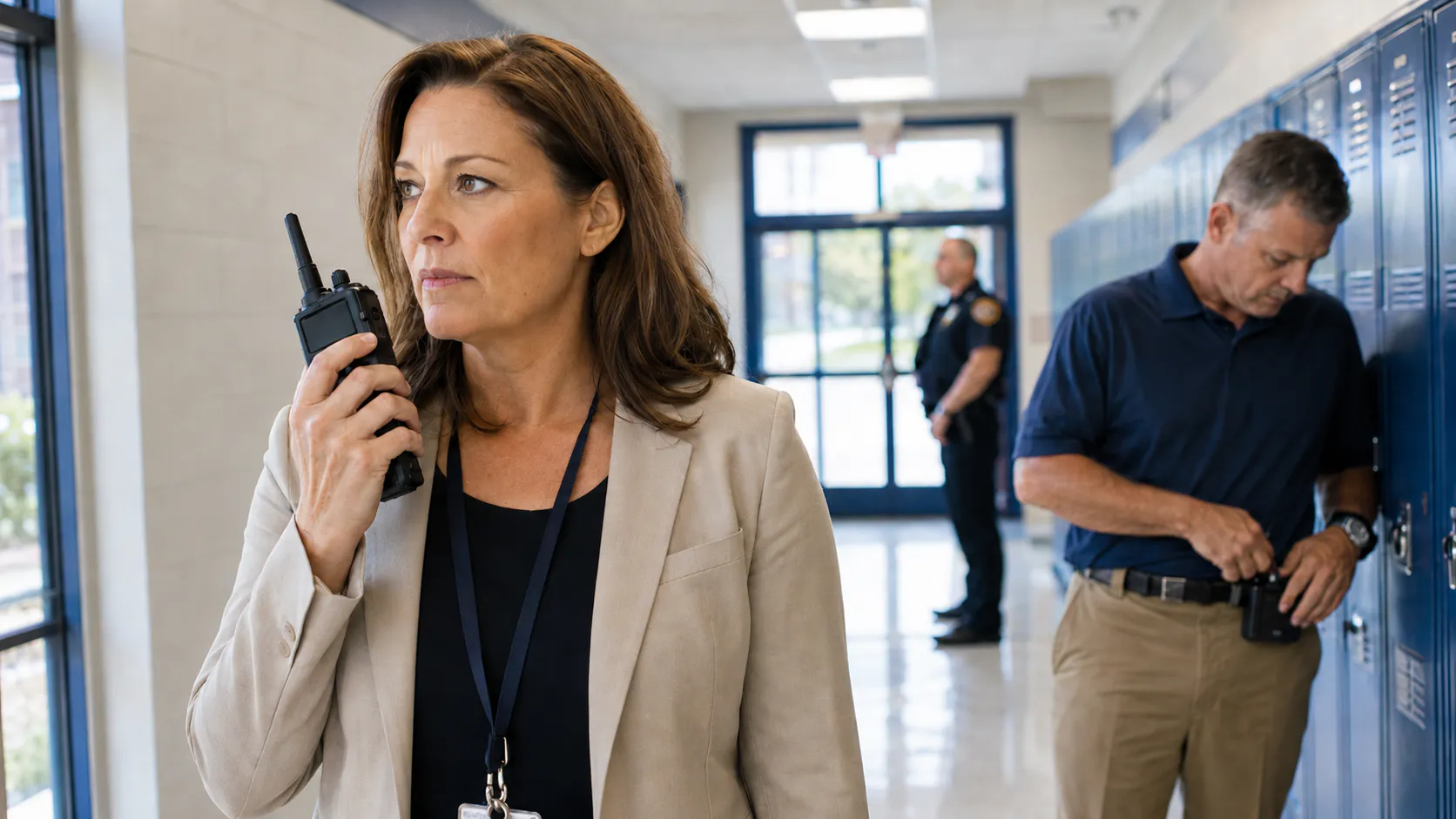
Ask any school administrator what keeps them up at night, and communication is almost always on the list. When a lockdown drill turns real, when a student goes missing on a field trip, or when a bus breaks down in the rain twenty miles from campus, the tool that decides how fast staff can respond is the radio in their hand. This guide walks district decision-makers through how to choose two way radios for schools without overbuying, underbuilding, or getting locked into a system that cannot grow.
We install and support these systems every week for districts across Washington, so the advice here is built around the questions we actually get asked: What coverage do we need? What safety features matter? Do we need a license? And what will it really cost? Let us take those in order.
Start with the three technology paths
Almost every school radio decision comes down to one of three paths. Picking the right one first saves you from expensive corrections later.
1. Consumer FRS and GMRS radios
These are the off-the-shelf handhelds you can buy at any big-box store. FRS radios need no license and GMRS radios need only a simple family license, which makes them cheap and easy to start with. The tradeoff is range and reliability. Inside a school built of concrete, steel, and cinder block, consumer radios often struggle to reach from one wing to the gym, let alone out to the athletic fields. They also share public channels, so a nearby business or another school can walk all over your traffic. For a small single-building elementary campus they can work as a starter option. For anything larger, they usually become a source of frustration. Our breakdown of FRS and GMRS differences goes deeper if you are weighing this path.
2. Licensed land mobile radio (LMR)
This is the professional-grade option most districts land on. Licensed LMR uses a frequency assigned to your district under FCC Part 90, so no one else is allowed to transmit on it. Paired with a repeater or a rooftop antenna, these systems cover a full campus, multiple buildings, and the surrounding grounds with clear, dependable audio. Modern digital LMR radios add encryption, individual and group calling, and rugged bodies that survive being dropped on a concrete floor. This is the path we most often recommend for K-12 districts that need reliability they can count on during an emergency.
3. LTE and push-to-talk over cellular (PoC)
PoC radios work over commercial cellular networks instead of your own radio frequency, which means coverage is effectively unlimited: a device on a field trip in another county still talks to the front office as if it were down the hall. That makes PoC a strong fit for districts with spread-out campuses, transportation fleets, or buses that travel well beyond a repeater’s reach. Coverage depends on the carrier’s network, and there is a monthly per-device cost, but the reach and the built-in GPS tracking often justify it. Our post on why PoC is replacing traditional radios explains the shift in detail, and you can see current LTE options on our LTE two way radio service page.
Many districts end up with a blend: licensed LMR for building-to-building campus coverage and PoC for buses and staff who travel. There is no single right answer, only the right fit for how your district actually operates.
Size the system before you price it
The most common mistake we see is buying radios by headcount instead of by need. Before you count devices, map out the following:
- Physical footprint. One building or a sprawling multi-building campus? Concrete and steel construction kills range, so a large high school almost always needs a repeater or an antenna to cover every corner.
- Outdoor and transport coverage. Do you need to reach the athletic fields, the bus loop, and drivers on their routes? That question alone often decides between LMR and PoC.
- Who carries a radio. Front office, principals, custodial and maintenance, campus security, nurses, coaches, and bus drivers all have different needs. Talk groups let you separate routine chatter from emergency traffic so the right people hear the right calls.
- Growth. A new wing, a second campus, or a bond-funded expansion should not force you to start over. Licensed and PoC systems both scale far better than consumer radios.
The safety features that actually matter
A radio is a safety tool first. When you compare devices, these are the features worth paying for in a school setting:
- Emergency button. A dedicated button that instantly signals a distress call to every radio or to a designated group, so a staff member in trouble does not have to explain the situation first.
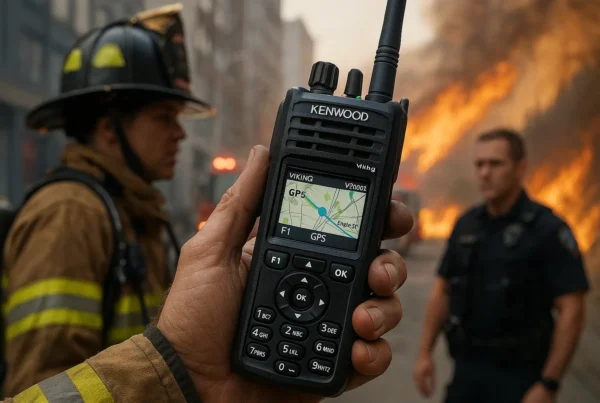
- GPS location. During an incident, knowing exactly where a call is coming from saves critical minutes. This is standard on PoC and available on many licensed digital radios.
- Mass and group alerting. The ability to push a single message to the whole district, one building, or one team at once.
- First responder interoperability. The ability for your system to connect with local police, fire, and EMS during an emergency. Networks like FirstNet are built for exactly this. See our guide to FirstNet radio compatibility for schools and our overview of what to look for in FirstNet school radios.
For a deeper look at building a safety-first system rather than just buying hardware, our companion article on reliable two way radio systems for K-12 school safety covers the emergency-response side in full.
Do schools need a radio license?
It depends on the path you choose. FRS radios require no license at all. GMRS requires a low-cost license. Licensed LMR requires an FCC Part 90 license tied to your district, which we handle as part of the setup so you are not navigating the paperwork alone. PoC radios need no radio license because they run on the cellular network. If you are unsure which applies to your situation, our post on whether you need a license for two way radios lays out the rules plainly.
Budgeting: think total cost, not sticker price
The cheapest radio is rarely the cheapest system. When you budget, account for the whole picture: the handhelds themselves, any repeater or antenna infrastructure, accessories like surveillance earpieces and multi-unit chargers, licensing, programming, staff training, and ongoing support or airtime for PoC. A licensed LMR system carries more upfront cost but little or no recurring fee. PoC flips that, with lower hardware cost and a predictable monthly per-device charge. Neither is automatically cheaper over five years, which is why sizing the system correctly matters more than chasing the lowest unit price.
Districts working within bond or grant timelines should also plan for phased rollouts. It is common to equip the highest-need buildings first, prove the system in a pilot, then expand district-wide as budget allows.
Deploying across a Washington district
Rolling out radios well is as important as choosing them. A good deployment includes a site survey to confirm coverage, radios programmed with your talk groups before they arrive, hands-on training for staff, and a clear plan for how radios are stored, charged, and accounted for each day. We support districts throughout the region, with dedicated pages for Thurston County, Pierce County, Lewis County, Mason County, and Grays Harbor County. Our full school radio systems overview shows what a district engagement looks like from survey to support.
Frequently asked questions
What kind of two way radios do most schools use?
Most districts beyond a single small building use licensed digital land mobile radios for reliable campus coverage, often paired with push-to-talk over cellular for buses and staff who travel off site. Consumer FRS and GMRS radios are usually only adequate for very small single-building schools.
How many radios does a school need?
It depends on roles, not just staff count. Front office, administration, security, custodial and maintenance, health staff, and transportation each typically carry a radio. A site survey is the best way to right-size the count for your buildings and grounds.
Can school radios connect with police and fire?
Yes, with the right setup. Interoperability with local first responders can be built in, and networks like FirstNet are designed to link schools with public safety agencies during emergencies.
Do schools need an FCC license for two way radios?
Licensed land mobile radio requires an FCC Part 90 license, which a dealer can handle for you. FRS radios need no license, GMRS needs a low-cost one, and PoC radios need none because they use the cellular network.
Ready to plan your district’s system?
Choosing two way radios for schools does not have to be complicated. Tell us how many buildings you have, how far your coverage needs to stretch, and what your safety priorities are, and we will map a system that fits. Whisler Communications has served Washington districts and first responders since 1959. Contact our team for a coverage assessment and a straightforward quote.