CB radio has been part of American communication culture for nearly 80 years. It shaped how truck drivers coordinated across the country, influenced an entire decade of pop culture, and laid the groundwork for the expectation that personal radio communication should be accessible without a license or technical background. Understanding where CB radio came from and how it has evolved explains both why it remains relevant in 2026 and where its limits are for professional operations.
The Origins of Citizens Band Radio
The FCC created the Citizens Band radio service in 1945, establishing a portion of the radio spectrum for public use without the specialized licensing required for amateur radio. The intent was to give ordinary citizens and small businesses access to personal radio communication for practical, everyday purposes.
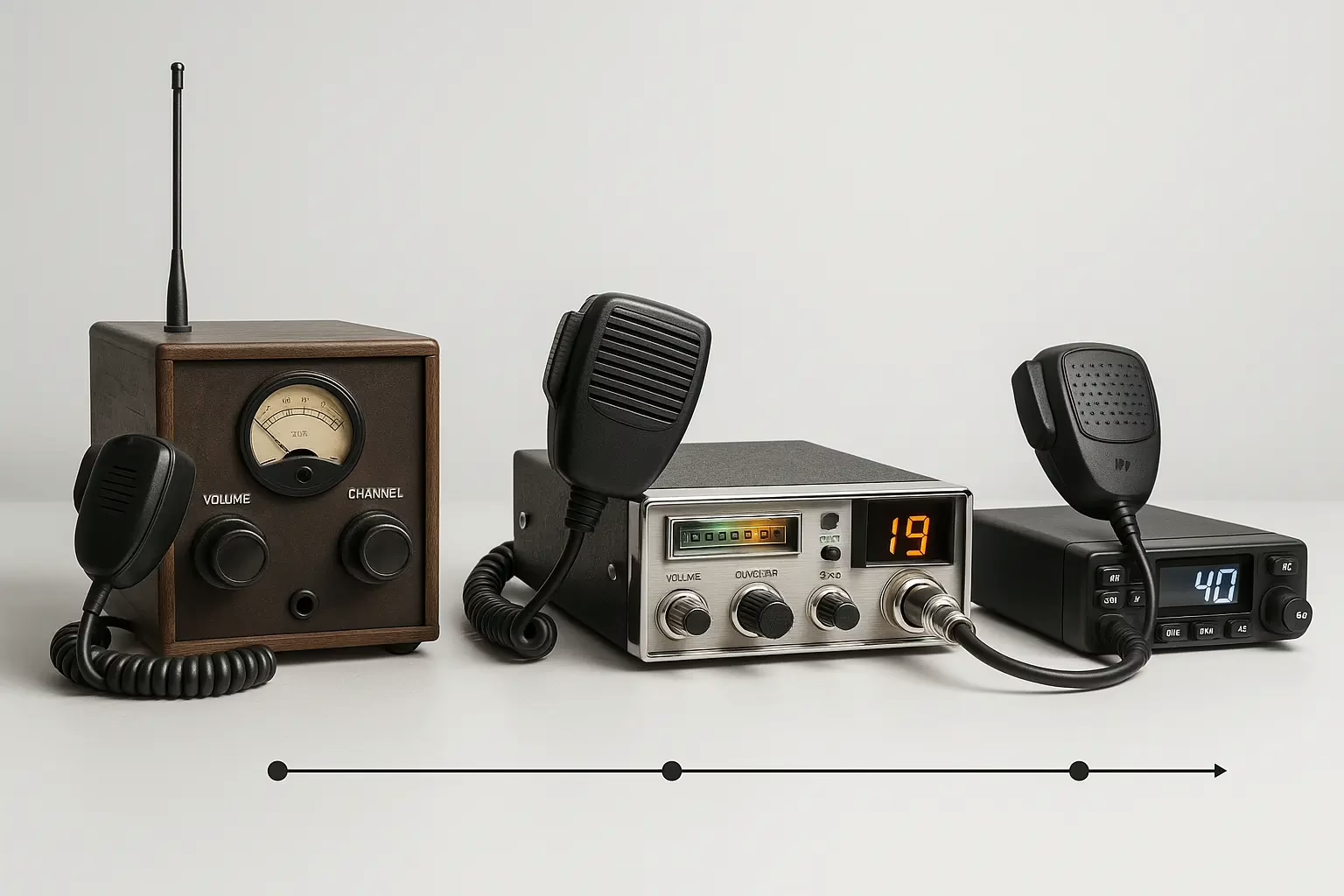
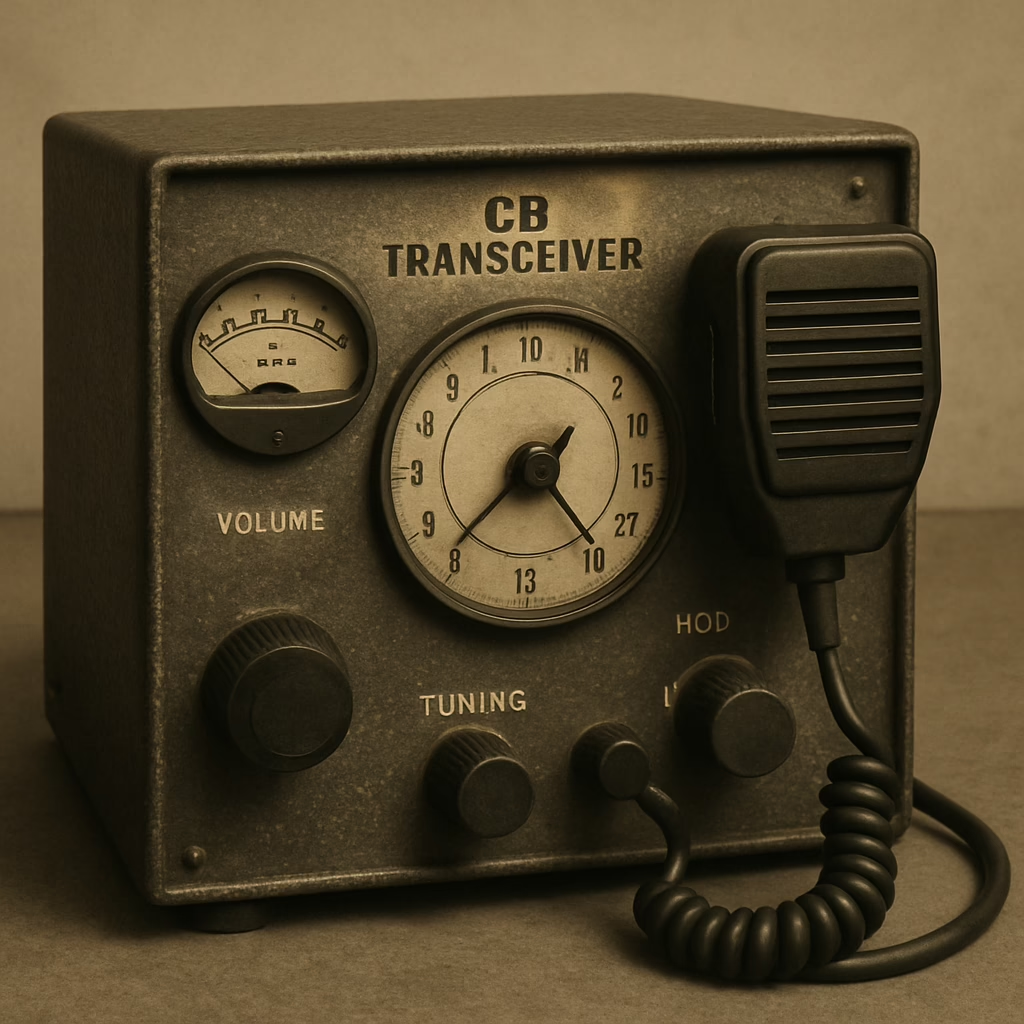
Early CB radios were large, expensive, and operated on 23 AM channels within the 27 MHz band. Equipment was predominantly used by small businesses, local government operations, and radio enthusiasts who built their own sets. Consumer adoption was limited through the 1950s and early 1960s due to cost and technical complexity, but the foundation for mass adoption was in place.
The 1970s: CB Radio Enters American Culture
The defining moment for CB radio came in the early 1970s. The 1973 oil crisis created nationwide fuel shortages and long lines at truck stops. Combined with the federally mandated 55 mph speed limit introduced in 1974, CB radio became an essential tool for truck drivers who used it to coordinate fuel availability, share road conditions, report speed traps, and stay connected across long, isolated stretches of highway.
The practical value spread quickly. By the mid-1970s, millions of Americans had CB radios in their vehicles. The CB became a cultural phenomenon. The 1977 film Smokey and the Bandit and the 1975 hit song Convoy brought CB lingo into mainstream awareness. Terms like “10-4,” “Smokey,” “bear trap,” and “good buddy” became part of everyday American language.
In 1977 the FCC responded to the explosion in CB users by expanding the service from 23 to 40 channels, the standard that remains in place today. Manufacturers could not keep up with demand and CB radio production hit record volumes through the late 1970s.
The Decline and Stabilisation of CB Radio
The CB boom peaked around 1977 and declined through the 1980s as cellular telephone networks began to emerge. Channel congestion, interference problems, and the novelty wearing off reduced the general public’s interest. CB radio usage consolidated back to its core professional audience: long-haul truck drivers, off-road enthusiasts, and rural users for whom cell coverage was unreliable or nonexistent.
This consolidation was not a failure. It was CB radio finding its natural use case. The channel 19 trucker community that formed through the 1970s remained active and is still the primary CB user base today, supplemented by a growing off-road community and emergency preparedness users who value communication that functions entirely independently of cellular infrastructure.
Key Technical Milestones in CB Radio Evolution
Single Sideband (SSB) Mode
The introduction of SSB capability was the most significant technical advancement in CB radio history. SSB concentrates transmit power more efficiently than standard AM, effectively doubling usable range within FCC power limits. While CB radios are legally limited to 4 watts AM output and 12 watts PEP on SSB, an SSB radio can communicate reliably at distances that would require significantly more power in AM mode.
SSB became the choice for serious long-distance users and remains the premium feature that separates basic CB radios from high-performance units. For long-haul truckers running remote corridors in the Pacific Northwest, SSB capability is the difference between hearing traffic ahead and operating blind. Our post on best CB radios for truckers covers the current SSB options in detail.
Digital Displays and Channel Scanning
Early CB radios used analog channel selectors and offered no way to monitor multiple channels simultaneously. Digital displays, automatic channel scanning, and weather channel monitoring transformed usability. Modern CB radios scan all 40 channels and lock onto active transmissions automatically, allowing users to monitor channel 19 while scanning for activity on other channels.
Noise Cancellation
Road noise, engine noise, and electrical interference from vehicle systems all degrade CB audio quality. Modern CB radios incorporate active noise cancellation in both the radio circuitry and microphone design, producing significantly cleaner audio than the static-prone units of the 1970s. This improvement matters most for professional truckers who transmit and receive constantly over long shifts in noisy cab environments.
FM Mode Approval
In 2021 the FCC approved FM mode for CB radios, a significant technical update that had been discussed for years. FM provides cleaner, clearer audio than AM by eliminating the amplitude-based interference that AM signals are susceptible to. FM mode is available on newer CB radio models and is backward compatible with AM for communication with older units. For users who primarily communicate with other modern radios, FM mode represents a meaningful audio quality improvement.
Bluetooth Integration
Recent CB radio models from manufacturers including President have added Bluetooth connectivity, allowing the radio to interface with a wireless microphone for handsfree operation. For truck drivers who need to keep both hands on the wheel during long hauls, Bluetooth CB capability reduces the need to reach for the microphone while transmitting.
PA Capability
Most professional-grade CB radios include a PA (public address) output that allows the radio to drive an external speaker for dock communication, gate announcements, or other situations where the driver needs to communicate outside the cab. This is a standard feature on working truck rigs and remains one of the practical differentiators between consumer-grade and professional CB equipment.
CB Radio in 2026: Who Still Uses It and Why
Despite the availability of smartphones, digital two-way radios, and push-to-talk cellular systems, CB radio maintains a genuine and active user base for specific reasons.
Cell-independent operation. CB radio requires no cell tower, no network subscription, and no internet connection. In the mountain passes, remote corridors, and rural stretches of the Pacific Northwest where cellular coverage is absent or unreliable, a CB radio works when nothing else does.
Channel 19 trucker community. The informal intelligence network on channel 19 remains genuinely useful. Real-time reports of weigh station status, road hazards, speed enforcement, and weather conditions from drivers ahead cannot be replicated by any digital service. This peer-to-peer road intelligence is the reason experienced long-haul drivers still carry a CB in 2026.
Zero operating cost. No subscription, no monthly fee, no data plan. A CB radio purchased today can operate for the next decade with no ongoing cost beyond occasional antenna maintenance.
Emergency preparedness. CB radio is increasingly popular among emergency preparedness communities as a communication backup that functions independently of any commercial infrastructure. The 40-channel system and channel 9 emergency monitoring make it a practical component of an off-grid communication plan.
When CB Radio Is Not Enough
CB radio has real limitations that make it unsuitable for professional business communication beyond trucking and specific outdoor use cases.
The 40 shared channels are public and unencrypted. Anyone with a CB radio can monitor your transmissions. For operations requiring communication privacy, this is a fundamental problem that CB cannot solve. Range is also limited by FCC power restrictions and antenna capability, typically 1 to 5 miles under typical conditions, which is insufficient for teams operating across large areas or multiple sites.
For businesses that need private channels, greater range, encryption, or connection to a wide area radio network, a licensed commercial two-way radio system under FCC Part 90 is the appropriate solution. If you are comparing CB radio against professional two-way radio options, our post on CB radio vs two-way radio covers the practical differences in detail.
CB Radio at Whisler Communications
Whisler Communications has carried CB radio equipment alongside professional two-way radio systems since 1959. We understand both the ongoing relevance of CB for trucking and specific outdoor applications and the point at which a professional operation needs to move to a licensed commercial system.
If you are looking for a CB radio for professional trucking use, see our guide to choosing a CB radio and our post on the best CB radios for truckers in 2026. If you are evaluating whether CB radio is the right tool for your operation or whether a licensed two-way radio system would serve you better, contact us and we can work through the options with you.