
Running a franchise means managing communication across teams, locations, and sometimes entire regions simultaneously. Unlike a single-site business where a basic radio setup covers everyone, a franchise operation introduces variables that make radio selection more complex: multiple buildings or sites, staff turnover that affects how quickly people learn new equipment, FCC licensing requirements that scale with your network, and a need for consistency across locations that a franchisee cannot always control independently.
This guide covers the specific considerations that franchise operators in the Pacific Northwest need to work through before choosing a two-way radio system.
Single-Site vs. Multi-Location Communication Needs
The first question is whether your franchise locations operate independently or need to communicate with each other.
Most franchise locations primarily need on-site communication. A restaurant where the kitchen needs to reach front-of-house, a retail store coordinating stock room and floor staff, or a service centre with technicians and dispatch are all largely self-contained communication environments. For these, a conventional on-site radio system with UHF frequencies works well. UHF penetrates walls and multi-floor buildings effectively, making it the right choice for indoor commercial environments. Our post on choosing the right two-way radio for your business covers the UHF vs VHF decision in more detail.
Multi-location franchises that need genuine cross-site communication, for example a regional manager covering six locations, a central dispatch coordinating field service teams across a metro area, or a security operation monitoring multiple properties simultaneously, need a different approach. Conventional radio systems do not bridge locations without repeater infrastructure. The practical options for multi-site franchise communication are a push-to-talk over cellular system like Diga-Talk+, which uses 4G LTE to connect users anywhere with cell coverage, or a wide area trunked network for operations that need coverage across larger geographic areas.
Matching Radio Type to Franchise Environment
Different franchise environments have different requirements and the wrong radio creates friction rather than solving it.
Quick service restaurants and food service. The priority here is compact form factor, clear audio in a noisy environment, and discreet design that does not create a poor customer impression. Lightweight earpiece-compatible radios with noise-cancelling microphones are the practical choice. Battery life needs to cover a full service shift without a mid-shift charge. Over-the-air programming is valuable in food service environments with high staff turnover, since reprogramming radios individually at scale is time-consuming.
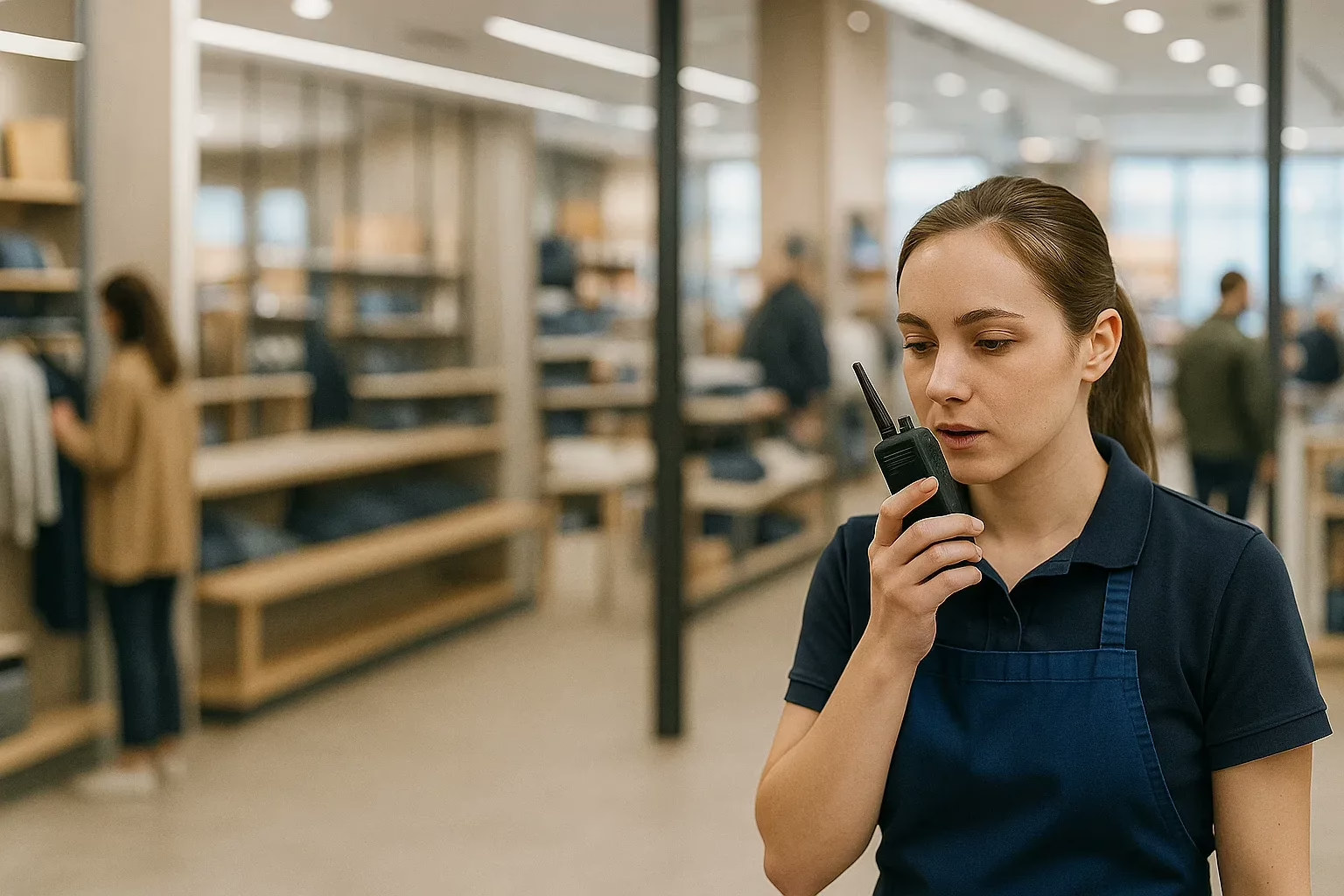
Retail chains. Retail staff need quick, low-friction communication that does not interrupt customer interactions. Compact radios with simple channel access and optional earpieces for discreet communication suit most retail environments. Indoor UHF coverage is the typical requirement, and for larger format stores or multi-floor retail, a site survey confirming coverage before purchasing is worthwhile.
Service-based franchises. Cleaning companies, maintenance franchises, security operations, and similar field service businesses need rugged hardware that handles outdoor conditions. MIL-STD-810 rated radios with IP67 water and dust resistance are appropriate for field teams. GPS tracking and lone worker monitoring become relevant for franchises with staff working alone in unfamiliar locations. See our post on two-way radios for workplace safety for detail on the safety features that apply to lone worker environments.
Hotels and hospitality franchises. Hospitality operations need discreet, professional-looking radios that housekeeping, front desk, security, and maintenance can all use across a large building. Indoor coverage reliability and battery life through long shifts are the primary considerations. Our post on best two-way radios for hotels and hospitality covers the specific requirements for that environment.
FCC Licensing Across Multiple Locations
This is the compliance area most franchise operators overlook. Professional two-way radio systems operating on licensed frequencies require an FCC Part 90 license. A single license covers a specific set of frequencies at a specific location. When you expand to multiple locations, each site may require its own frequency coordination and licensing, depending on the frequencies used and whether locations are close enough to interfere with each other.
For franchise networks that are adding locations regularly, managing FCC licensing proactively is important. Letting locations go unlicensed creates compliance exposure, and retrofitting a frequency plan across an established network is more complicated than building one correctly from the start.
Whisler Communications handles FCC license applications, frequency coordination, and renewals for franchise operators across our service area. If you want to understand the licensing framework before getting into specifics, our guide to FCC two-way radio regulations covers the requirements by radio service type.
Staff Turnover and Ease of Use
Franchise operations typically have higher staff turnover than owner-operated businesses. A radio system that requires significant training or has a complex interface creates a recurring onboarding burden every time staff changes. This is a practical operational consideration that often gets overlooked in the equipment selection process.
The right radio for a high-turnover franchise environment is one where new staff can be operational within minutes. Simple channel selection, clearly labelled buttons, and a rugged enough design to survive handling by staff who are not invested in protecting the equipment all matter. Over-the-air programming, where radios can be updated centrally without collecting and manually reprogramming each unit, is a significant operational advantage for franchise networks.
Scalability as Your Franchise Grows
A radio system chosen for three locations needs to scale to ten without a full replacement. This means choosing a platform rather than just choosing a radio model. The platform includes the radio hardware, the frequency plan, the licensing structure, and for multi-site operations, the network infrastructure.
LTE push-to-talk systems like Diga-Talk+ scale most easily for franchise growth, since adding a new location means adding radios to the existing network rather than extending RF infrastructure. For franchise networks operating within a defined geographic area, a conventional licensed system with a thoughtful frequency plan can also scale well with proper planning from the start.
If your franchise is growing and you are not sure which approach fits your trajectory, that is the right conversation to have before committing to hardware rather than after. Our post on signs it is time to upgrade your radio system is also worth reading if you are evaluating whether your current setup is still serving your needs as the business has grown.
Getting the Right Fit for Your Operation
Whisler Communications works with franchise operators and multi-location businesses across Southwest Washington to design radio systems that fit the operational environment, scale with growth, and stay compliant with FCC requirements. We carry Kenwood, Kenwood Viking, Motorola, Icom, and Diga-Talk+ LTE radios, and we handle programming, installation, FCC licensing, and ongoing support across all of them.
Contact us to discuss your franchise communication requirements.