
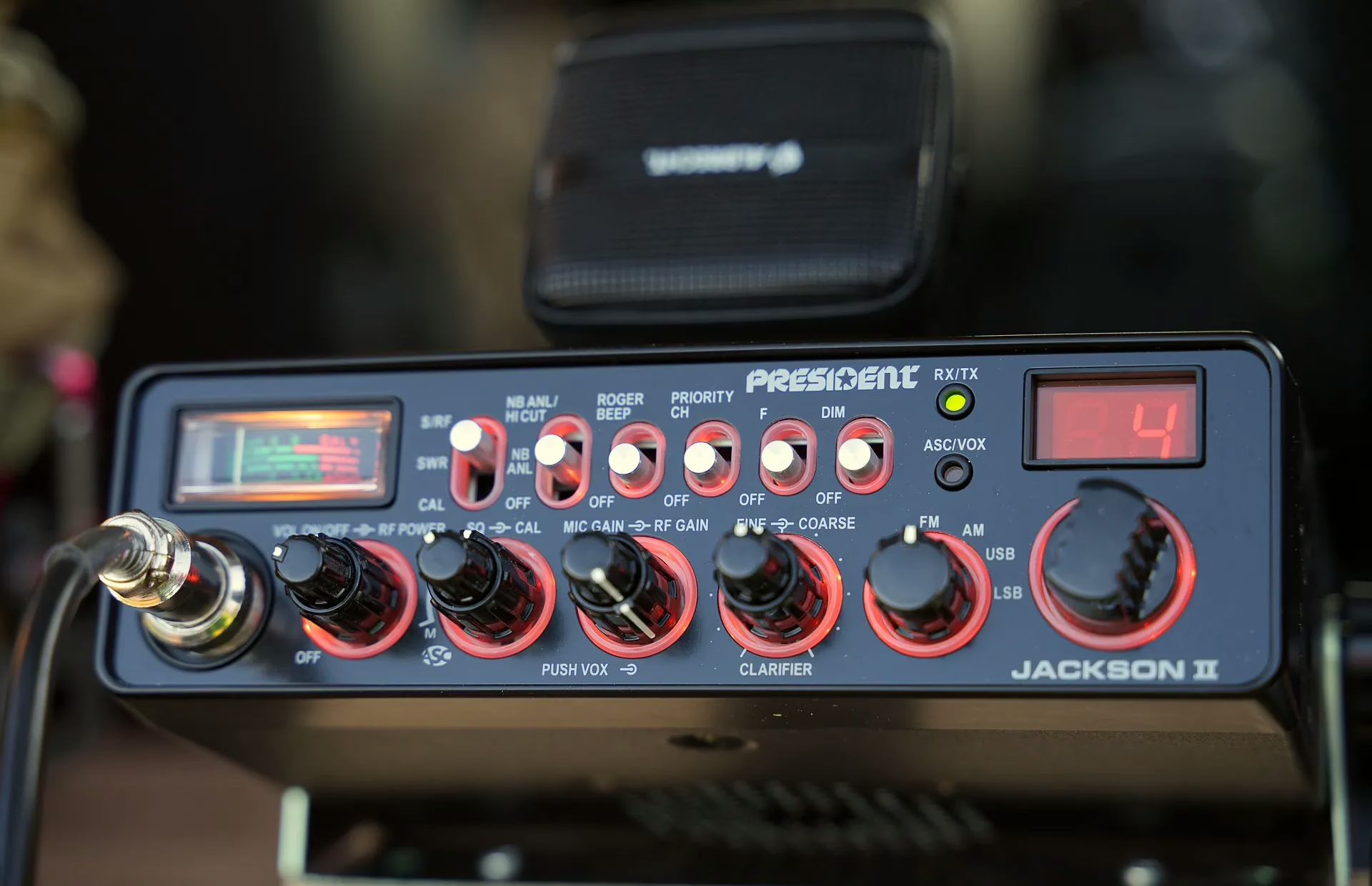
When choosing a CB radio, you’re making an investment in reliable communication. Whether you’re a trucker, outdoor enthusiast, or emergency responder, selecting the right CB radio requires understanding key features, power specifications, and antenna options. This guide walks you through everything you need to know.
What Is a CB Radio?
CB (Citizens Band) radios operate on 40 dedicated channels in the 27 MHz frequency band. Unlike smartphones, CB radios don’t require subscriptions or cell coverage. They’re used by truck drivers, motorcyclists, off-road enthusiasts, and emergency services for direct, walkie-talkie style communication.
Key Features to Evaluate
Power Output
CB radios operate at a maximum of 4 watts, regulated by FCC standards. However, this is the legal limit for AM transmission.
- Mobile units: Typically 4 watts of transmit power
- Handheld units: Usually 1-2 watts for portable convenience
- Fixed base stations: Full 4-watt output for maximum range
Higher wattage provides greater range, especially in rural areas with less interference.
Display Type
Modern CB radios offer LCD or digital displays showing:
- Current channel number
- Frequency information
- Signal strength (SWR readings)
- Modulation levels
- Power output indicators
Basic analog dials are cheaper but less precise for tuning. Digital displays improve accuracy and ease of use.
RF Gain Control
RF gain adjusts the receiver sensitivity. In areas with heavy interference, manual RF gain control helps you dial out competing signals. This feature is essential for serious CB users.
Weather Alert Capability
Many modern CB radios include NOAA weather alert receivers, giving you access to emergency broadcasts and severe weather warnings. This is particularly valuable for road travel.
Single Sideband (SSB) Mode
SSB capability doubles your effective range by reducing bandwidth. If you need extended communication distance, SSB is worth the investment. However, it increases the radio’s cost significantly.
CB Radio Types and Applications
Mobile CB Radios
Designed for vehicles with standard 12V power. These mount permanently under dashboards or on sun visors. Mobile units deliver full 4-watt power and feature dashboard-integrated displays. They’re ideal for truckers and road warriors.
Handheld CB Radios
Portable units with internal batteries. Handheld CB radios sacrifice range for mobility. They’re perfect for construction sites, hiking, and situations where portability matters more than distance.
Base Station CB Radios
Stationary units operating from home or office locations. Base stations connect to external antennas on roofs or towers, providing maximum range. They’re used by emergency coordinators, radio enthusiasts, and businesses requiring reliable fixed communication.
Antenna Selection Matters
Your antenna choice often matters more than your radio choice. A quality antenna on a basic radio outperforms a premium radio with a poor antenna.
Magnetic Mount Antennas
Quick-mount antennas that attach to any metal surface on your vehicle. They’re convenient but provide less directional advantage than permanently mounted options.
Fiberglass Antennas
Affordable, durable, and suitable for most applications. They handle wind and weather well but may not match premium performance of other types.
Stainless Steel Antennas
Premium option offering superior conductivity and durability. They provide better range and reliability, though they cost more and require permanent installation.
No-Ground Plane Antennas
Designed to mount on non-metal surfaces or vehicle roofs without large metal areas. These are specialized solutions for specific mounting situations.
Top Brands and Models
Leading CB radio manufacturers include:
- Kenwood: Professional-grade equipment with advanced features
- Uniden: Budget-friendly options with solid performance
- Cobra: Mid-range models popular with truckers
- President: Known for advanced digital capabilities
Research current models that match your specific needs and budget.
Power and Range Considerations
CB radio range depends on several factors:
- Transmitter power output (capped at 4 watts)
- Antenna quality and height
- Terrain and obstacles
- Atmospheric conditions
- Receiver sensitivity
In ideal conditions with quality equipment, expect:
- 5-10 miles on handheld units
- 15-25 miles on mobile installations
- 30-50 miles on base stations with elevated antennas
- Up to 100 miles under exceptional conditions
These ranges decrease significantly in urban areas, forests, or mountainous terrain.
FCC Regulations You Should Know
Operating a CB radio requires compliance with FCC regulations:
- Transmit power cannot exceed 4 watts
- All transmissions must be in English
- Obscene or indecent language is prohibited
- Commercial use is restricted
- Operators should identify with a personal handle rather than a name
- Channeling violations can result in fines
- No license is required to operate, but violations carry penalties
Understanding these rules protects you and respects other users’ airspace.
Making Your Final Decision
Choose your CB radio based on:
- Primary Use: Mobile, handheld, or base station
- Range Needs: Consider typical communication distances
- Feature Requirements: Weather alerts, SSB, digital display
- Budget: Balance features with cost
- Installation: Permanent or temporary mounting
- Brand Reliability: Research user reviews and warranty support
Start with a mid-range model from a reputable manufacturer. You can always upgrade your antenna or add accessories later. The most important factor is selecting equipment appropriate for your specific communication needs.
Choosing the right CB radio transforms your communication capability. By understanding power specifications, evaluating key features, selecting quality antennas, and respecting FCC regulations, you’ll make an informed purchase decision. Whether you’re hitting the road or coordinating team communication, the right CB radio provides reliable, cost-effective connectivity without cell service dependence.