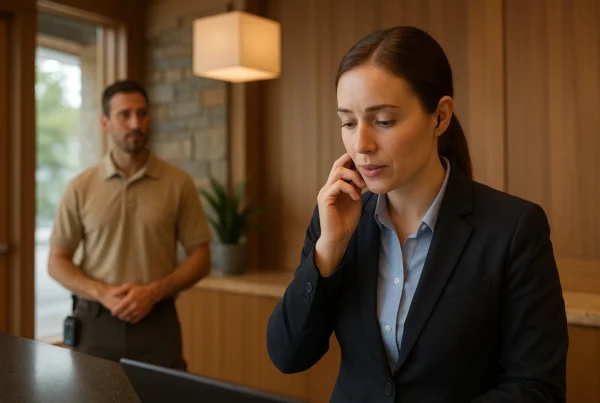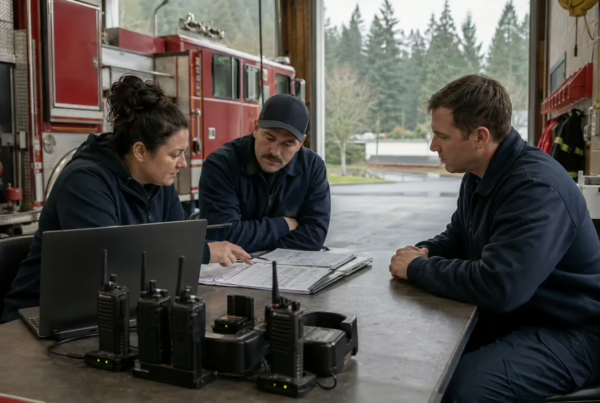
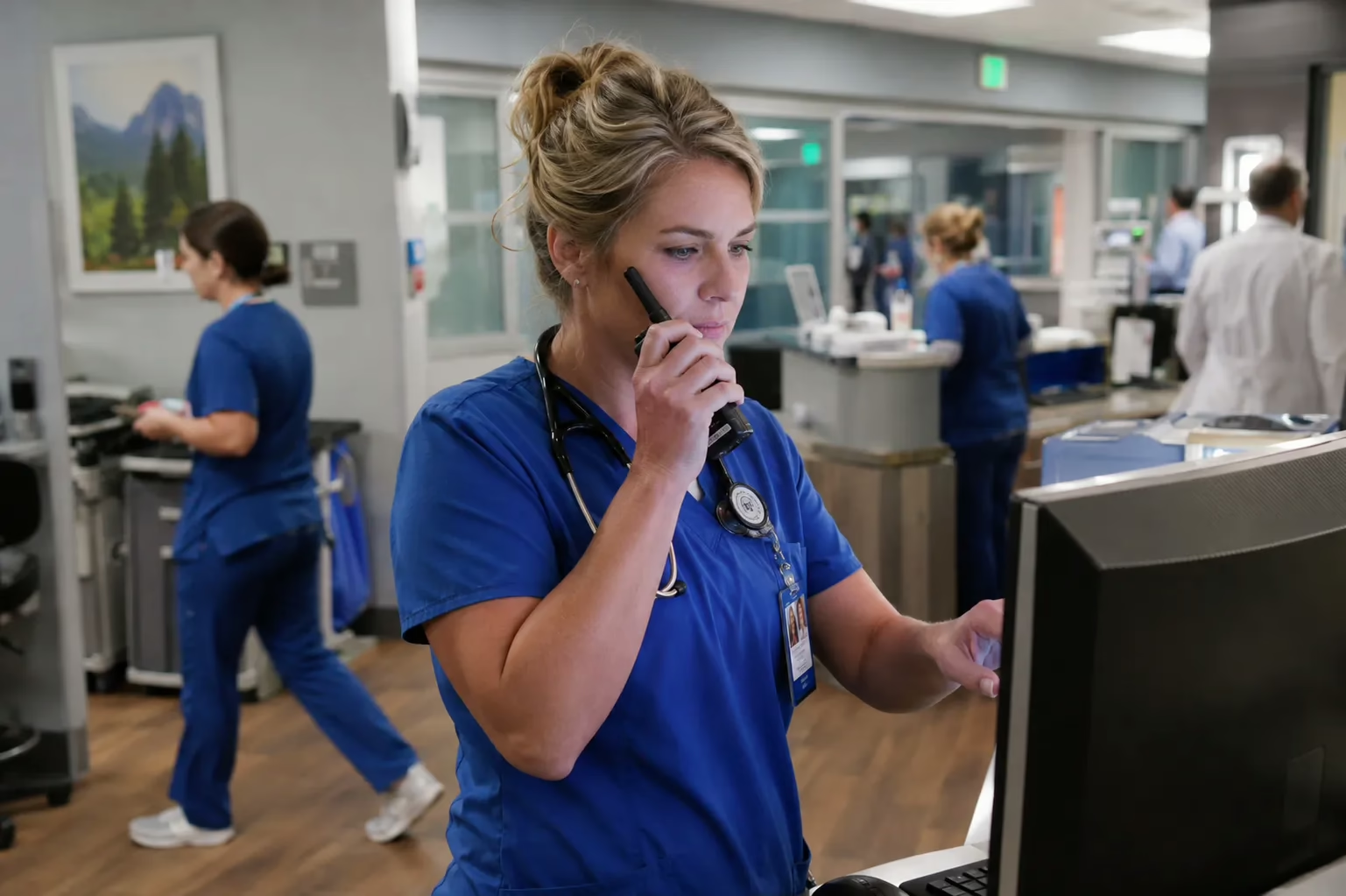
Hospitals are among the most communication-intensive environments in any industry. At any moment, a charge nurse is coordinating a patient transfer, a security officer is responding to an access issue, a facilities technician is handling an equipment alarm, and an emergency team is mobilising for a code. All of it is happening simultaneously across multiple floors, wings, and sometimes multiple buildings on the same campus.
Cell phones are not built for this environment. They require dialling, they rely on cellular coverage that is frequently degraded inside concrete hospital structures, and they cannot reach a group of people simultaneously with a single button press. Pagers provide one-way alerts with no ability to respond. Neither tool solves the core hospital communication problem: instant, reliable, two-way voice communication between the right people at the right moment.
Two-way radio systems have been the practical solution in healthcare for decades, and the current generation of digital radios brings capabilities that older analog systems and pagers simply could not provide. This guide covers what healthcare facilities in Washington State need to consider when selecting and deploying a radio system.
The Unique Communication Challenges of Healthcare Environments
Healthcare facilities present radio system challenges that most other industries do not face in the same combination.
Building construction. Hospitals are typically built with thick concrete floors, lead-lined radiology rooms, and dense internal structure that attenuates radio signals significantly. A radio system that performs well in an open warehouse may have serious dead zones in a multi-floor hospital. Indoor coverage planning and often a distributed antenna system or repeater infrastructure is required to achieve reliable coverage across all areas of a hospital campus. The FCC’s rules on in-building coverage systems provide useful context on how indoor radio infrastructure is regulated.
Noise environments. Clinical areas, emergency departments, and ICUs have significant ambient noise from equipment, alarms, and activity. Radios for healthcare staff need strong noise cancellation on both the transmit and receive side so that communication is clear regardless of what is happening in the background.
Infection control. This is the consideration most radio suppliers outside healthcare miss entirely. Radios in a clinical environment are handled by multiple staff members across shifts and need to be cleanable with hospital-grade disinfectants without the housing degrading. Some models include antimicrobial casing materials. All models used in clinical areas should be confirmed compatible with the facility’s cleaning protocols before purchase. The CDC guidelines on environmental infection control in healthcare settings are worth reviewing when establishing cleaning protocols for shared equipment including radios.
Discretion near patients. Radio traffic near patients needs to be managed carefully. Earpieces and covert acoustic tube accessories allow staff to receive radio communication without disturbing patients or broadcasting sensitive information in patient areas. Volume control and the ability to set different profiles for different zones within the facility are useful features for healthcare deployments.
Shift length and battery life. Healthcare shifts run 12 hours routinely. A radio that cannot sustain a full shift on a single charge creates operational problems, either mid-shift battery swaps that interrupt workflows or radios going dead at the wrong moment. Radios selected for healthcare use should provide at minimum 12 to 14 hours of battery life under typical healthcare duty cycles.
How Different Hospital Departments Use Two-Way Radios
Nursing Teams
The primary use case for nursing is rapid coordination within a unit and between units. A nurse needing patient transport, requesting pharmacy, or calling for assistance from another floor needs instant group communication, not a phone call that goes to voicemail. Two-way radios with programmable talk groups allow nursing teams to communicate within their unit on one channel and escalate to a cross-department channel when needed.
Lightweight, compact radios with simple channel access work best for nursing staff who are moving constantly and need to clip a radio to a scrub pocket without it being cumbersome. The Kenwood NX Series provides a range of compact options with clear audio and multi-channel programming suited to nursing team deployments.
Security Teams
Hospital security has become increasingly demanding. The Joint Commission identifies workplace violence as a significant and growing concern in healthcare settings, and security teams need reliable, instant communication to respond effectively. Managing access control, responding to behavioural incidents, coordinating visitor management, and supporting emergency response all require reliable, instant communication across a large and complex building. Security teams typically need radios with longer battery life, more rugged construction, and encryption capability to keep security communications private from other staff channels.
For hospitals with larger security operations or those that work alongside local law enforcement during incidents, interoperability with external agency radios is worth considering. Our post on two-way radios for workplace safety covers the emergency alert and man-down features that are also relevant for lone security officers working remote areas of a large campus.
Facilities and Maintenance
Facilities teams in hospitals handle everything from HVAC alarms to medical gas system checks to elevator maintenance. They operate across the entire building footprint, often in mechanical spaces, parking structures, and areas with challenging RF coverage. Rugged construction and reliable indoor coverage are the primary requirements for facilities radio deployments, alongside the ability to communicate with nursing and security when building issues affect patient care areas.
Emergency Response Coordination
Code response in a hospital requires instant, simultaneous communication with multiple teams. A code blue needs nursing, the crash cart team, respiratory, and pharmacy notified simultaneously. A code grey needs security, nursing, and administration coordinating in real time. Two-way radios with group calling and priority channel access handle this more effectively than any phone-based system.
OSHA’s guidelines on emergency action plans require healthcare facilities to maintain reliable internal communication systems for emergency response. Two-way radios are explicitly recognised as a compliant communication tool for this purpose. For facilities that also coordinate with external EMS and fire department resources, having radios that can access mutual aid channels or interface with external agency communication systems adds significant value during major incidents. This is where push-to-talk over cellular solutions like Diga-Talk+ become relevant for larger healthcare systems that need to bridge internal radio communication with external agency coordination.
Environmental Services and Patient Transport
Housekeeping and patient transport teams cover the most ground of any hospital department, moving between every floor and wing continuously. These teams benefit from reliable coverage across the entire building and simple radio interfaces that do not require training beyond basic push-to-talk operation. Their radios also take the most physical abuse, so durability and resistance to cleaning chemicals are particularly important for this user group.
Radio Features That Matter Most in Healthcare
Digital audio quality. Modern digital radios provide significantly clearer audio than analog, which matters in noisy clinical environments. Digital also allows for more talk groups on the same frequency infrastructure, supporting the department separation that hospital deployments require.
Encryption. Healthcare facilities have strong obligations around information privacy under HIPAA. While radio communication does not transmit patient data in the way electronic health records do, security-sensitive communications and any discussion involving patient information should be on encrypted channels. Digital radios support AES encryption as standard on most professional models, providing a practical layer of communication security consistent with HIPAA’s administrative safeguard requirements.
Programmable talk groups. A hospital radio deployment typically requires at minimum separate channels for nursing, security, facilities, and administration, with the ability for specific staff to monitor and access multiple channels. Programmable talk groups on digital radios handle this without requiring separate radio hardware for each function.
Lone worker and emergency alert. For security officers, facilities staff working alone in remote building areas, and any staff member in a role with personal safety exposure, man-down detection and emergency alert buttons provide a safety layer that is increasingly expected in healthcare environments. OSHA’s lone worker safety guidelines outline employer obligations for staff working in isolated conditions, which applies to late-night facilities and security staff in large hospital buildings. See our post on workplace safety radio features for more detail on how these work in practice.
Indoor coverage. Before selecting any radio for a hospital deployment, confirm that the system will provide coverage in all areas of the facility including basement levels, stairwells, underground parking, and any lead-lined rooms. A site survey is the only reliable way to confirm coverage before purchase. Whisler Communications conducts site surveys for healthcare facilities before recommending a system.
LTE Push-to-Talk for Multi-Site Healthcare Operations
For healthcare networks that operate across multiple campuses, clinics, or facilities in different locations, conventional radio systems face coverage limitations that push-to-talk over cellular solves directly. Diga-Talk+ LTE radios operate over 4G LTE networks, providing push-to-talk communication between users anywhere with cellular coverage, including between facilities in different cities.
For a regional healthcare network coordinating between a main hospital and satellite clinics across Thurston, Pierce, or Lewis counties, Diga-Talk+ allows the same instant PTT communication that two-way radios provide on a single campus to extend across the entire network without additional infrastructure. The Diga-Talk 9751 and Diga-Talk 9850 are the models we most commonly deploy for healthcare clients with multi-site requirements.
Washington State Healthcare Communication Compliance
Healthcare facilities in Washington State operate under both federal requirements and Washington State Department of Health regulations that touch on facility safety and emergency preparedness. The state’s Hospital Incident Command System guidelines for Washington hospitals require reliable internal communication as part of emergency preparedness planning. Two-way radio systems that cover the full facility footprint and support department-level talk group separation satisfy the communication infrastructure requirements of those guidelines.
For hospitals in Southwest Washington that participate in regional emergency preparedness exercises through Thurston, Pierce, or Lewis county emergency management, having radio infrastructure that can interface with county public safety systems during drills and real incidents is an additional consideration worth discussing with a local radio provider.
Getting the Right System for Your Facility
Healthcare radio deployments require more planning than most commercial radio installations. The combination of building construction challenges, infection control requirements, department-specific needs, and patient environment considerations means that an off-the-shelf approach rarely delivers the right result.
Whisler Communications works with healthcare facilities across Southwest Washington to assess coverage requirements, design talk group structures, select appropriate hardware, and handle installation and ongoing support. We serve hospitals, clinics, and healthcare networks in Thurston, Pierce, Mason, Lewis, Grays Harbor, Kitsap, and Clark counties from our Olympia location.
If your facility is evaluating a radio system upgrade or deploying radios for the first time, start with a conversation about your specific environment and operational requirements. The right system depends on factors that are specific to your building, your departments, and your staff workflows. If you are also considering whether your current system needs replacing, our post on signs it is time to upgrade your radio system covers the indicators that typically drive that decision.
Contact Whisler Communications to discuss two-way radio options for your healthcare facility.