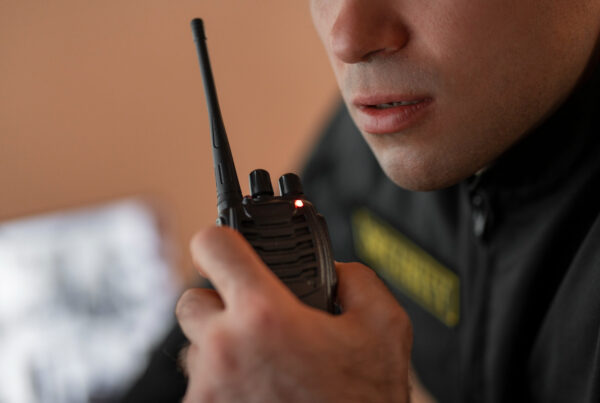
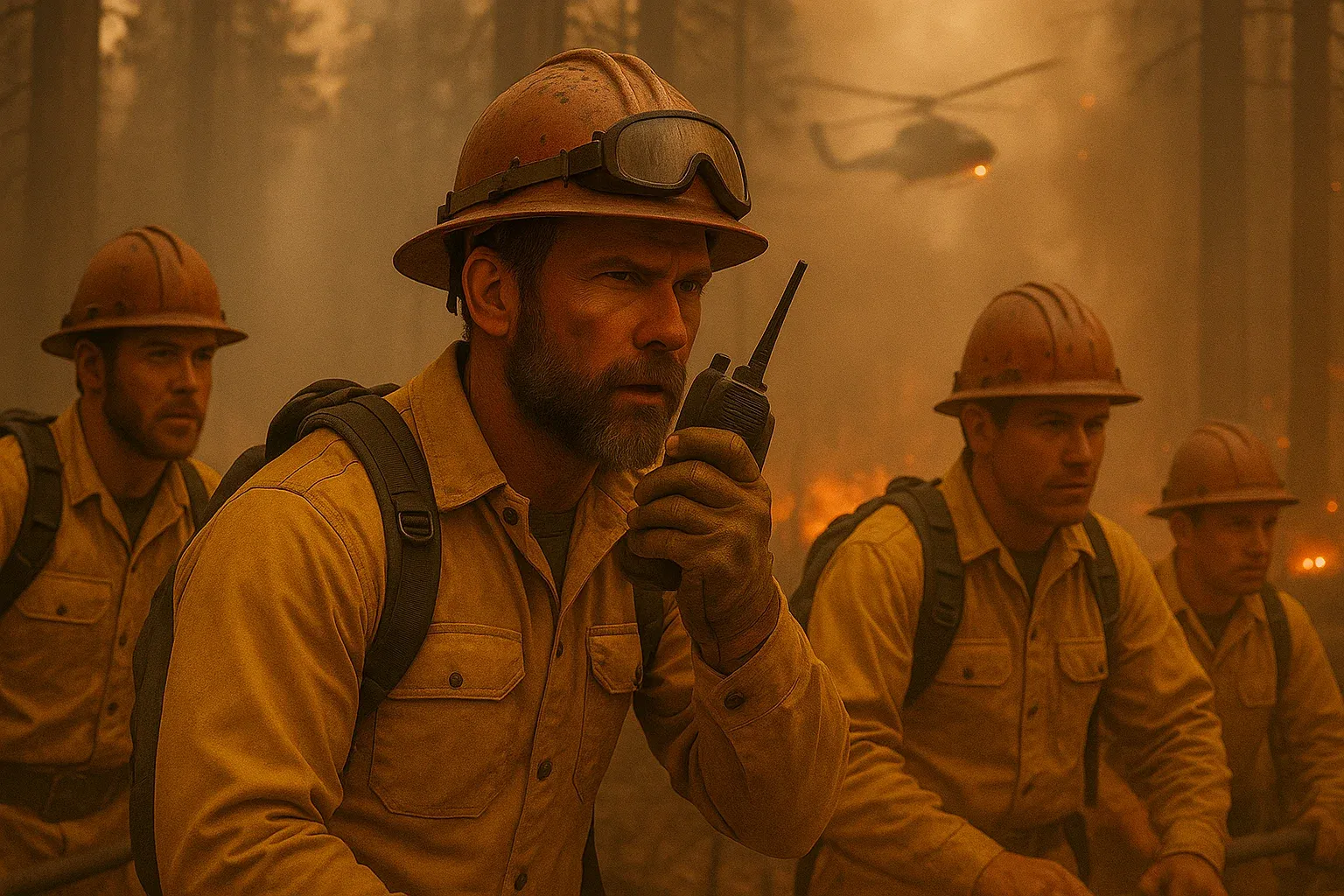
Wildfire response is one of the most communication-dependent operations in emergency management. Crews spread across steep terrain, air support coordinating with ground teams, incident command tracking multiple divisions simultaneously, and conditions that can change the direction of a fire faster than a radio update can travel. In that environment, communication failure is not an inconvenience. It is a life safety issue.
Cell networks are not the answer in wildfire zones. Rural and forested areas in Washington, including Lewis County, the eastern slopes of the Cascades, and the Olympic Peninsula foothills, have limited or no cellular coverage in the areas where wildfires burn. Even where coverage exists, cell towers are vulnerable to fire damage and network congestion during major incidents when every responder in the region is trying to communicate simultaneously.
Two-way radio systems built on Land Mobile Radio infrastructure remain the communication backbone for wildfire response. This post covers what makes a radio system effective for wildland fire operations, the features fire crews and incident commanders depend on, and how departments in Southwest Washington access the infrastructure they need.
Why Cell Phones Fail in Wildfire Operations
The limitations of cell-based communication in wildfire response go beyond coverage gaps. Cell networks are designed for consumer traffic loads. During a major incident, the simultaneous demand from firefighters, law enforcement, media, and evacuating civilians overwhelms available capacity quickly. Priority access on commercial networks is not guaranteed for most users, and in the areas where Pacific Northwest wildfires typically occur, coverage is sparse before any incident-related congestion.
Beyond coverage and capacity, cell phones require two-way initiation of a call. Radio push-to-talk connects instantly to an individual, a group, or an entire division with one button press. In a fast-moving fire environment where a crew leader needs to reach four people in different positions simultaneously, that difference in communication speed is operationally significant.
What Wildfire Radio Systems Need to Do
Operate Without Commercial Infrastructure
Wildfire operations regularly occur in areas with no cell coverage and no access to fixed communications infrastructure. Radio systems for wildland fire need to function on dedicated frequencies using Land Mobile Radio technology, either on conventional channels or through a wide area trunked network with mountaintop repeater infrastructure that covers remote terrain.
For departments in Southwest Washington, FleetNet provides wide area digital trunked radio coverage across a significant portion of the state, including areas that conventional portable radio systems cannot reach reliably. This is particularly relevant for mutual aid deployments where crews may be operating well outside their home jurisdiction.
Support Multi-Agency Interoperability
Wildfire response in Washington routinely involves volunteer fire departments, career departments, DNR crews, the US Forest Service, county sheriff offices, EMS, and sometimes National Guard assets. Each of these agencies may arrive with different radio equipment and different frequency plans.
Interoperability between agencies is one of the most persistent challenges in wildfire response and one of the most consequential when it fails. Modern P25-compatible digital radios support shared talk groups and cross-agency communication without requiring all agencies to be on the same system. Radios like the Kenwood Viking VP8000 support NXDN, DMR, P25 Phase 1 and 2, and analog FM in a single device, allowing a crew member to move between agency channels without swapping radios.
For a deeper look at how multi-protocol radios handle interoperability, see our Kenwood radio buyer’s guide.
Withstand Extreme Environmental Conditions
Wildland firefighters operate in conditions that destroy consumer electronics quickly. Radios in this environment need to meet MIL-STD-810 specifications for heat, shock, dust, and water ingress. IP67 rating or higher is the practical standard for radios used in wildland fire, ensuring the device continues functioning when submerged briefly, exposed to falling ash and debris, or subjected to the physical stress of working in rough terrain.
Battery life under load is equally important. A radio that starts the shift at full charge and dies four hours into a 16-hour operational period is a hazard. Radios selected for wildfire deployment should provide full-shift battery life with extended options available for long operations.
Provide Emergency Alert and Safety Features
Man-down detection, lone worker monitoring, and one-button emergency alerts are not optional features for wildland fire crews. They are baseline safety requirements. A firefighter who becomes separated, injured, or incapacitated in a remote area needs a radio that automatically notifies command without requiring the firefighter to be able to operate it.
Man-down detection uses motion sensors to identify when a radio has been stationary for a configurable period and automatically sends an alert with GPS coordinates to dispatch or incident command. Emergency alert buttons provide instant distress notification. Combined with GPS tracking, these features give incident commanders real-time visibility of crew positions and the ability to respond immediately when something goes wrong.
Our post on two-way radio features for workplace safety covers these capabilities in more detail, including how they relate to OSHA lone worker requirements applicable to wildland fire crews.
Support Incident Command Communication Structure
Wildfire operations run on an Incident Command System structure with divisions, branches, and functional sections that each need their own communication channels. A radio system for wildland fire needs to support multiple programmable talk groups so that division supervisors, air operations, logistics, and command can operate on separate channels while maintaining the ability to reach across groups when needed.
Digital trunked systems like FleetNet handle this through dynamic channel allocation and configurable talk groups, which is one reason trunked radio has become the standard for serious wildfire operations rather than conventional multi-channel systems.
Volunteer Fire Departments in the Pacific Northwest
Many of the fire departments in Lewis, Mason, Grays Harbor, and eastern Thurston County that respond to wildland fires are volunteer or combination departments with limited budgets for communication infrastructure. The challenge for these departments is accessing professional-grade radio capability without the capital cost of building private infrastructure.
FleetNet connectivity through Whisler Communications addresses this directly. Rather than funding tower construction and frequency licensing, volunteer departments connect their radios to existing wide area infrastructure and get the same coverage and trunking capability as larger career departments. For volunteer departments evaluating their communication systems, our post on top radio features every fire department needs covers the specific requirements for fire service radio selection.
Departments that are considering updating their communication equipment may also be eligible for federal grant funding. The AFG grant program provides funding specifically for fire department communication equipment, and Whisler Communications assists departments with the application process.
Getting the Right System in Place Before Fire Season
The time to assess and upgrade a wildfire communication system is not during an active incident. Departments that identify coverage gaps, aging hardware, or interoperability limitations before fire season have time to address them through proper system design, equipment procurement, and infrastructure work.
Whisler Communications works with fire departments and emergency management agencies across Southwest Washington on radio system design, FleetNet connectivity, equipment selection, and FCC licensing. We understand the terrain, the mutual aid relationships between regional departments, and the practical communication requirements of wildland fire operations in this part of the state.
Contact us to discuss your department’s wildfire communication setup before the season starts.