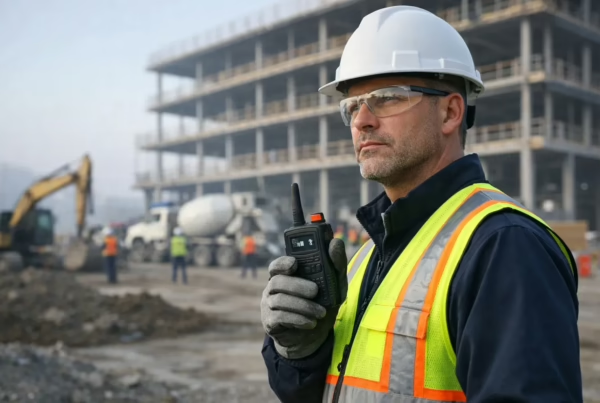
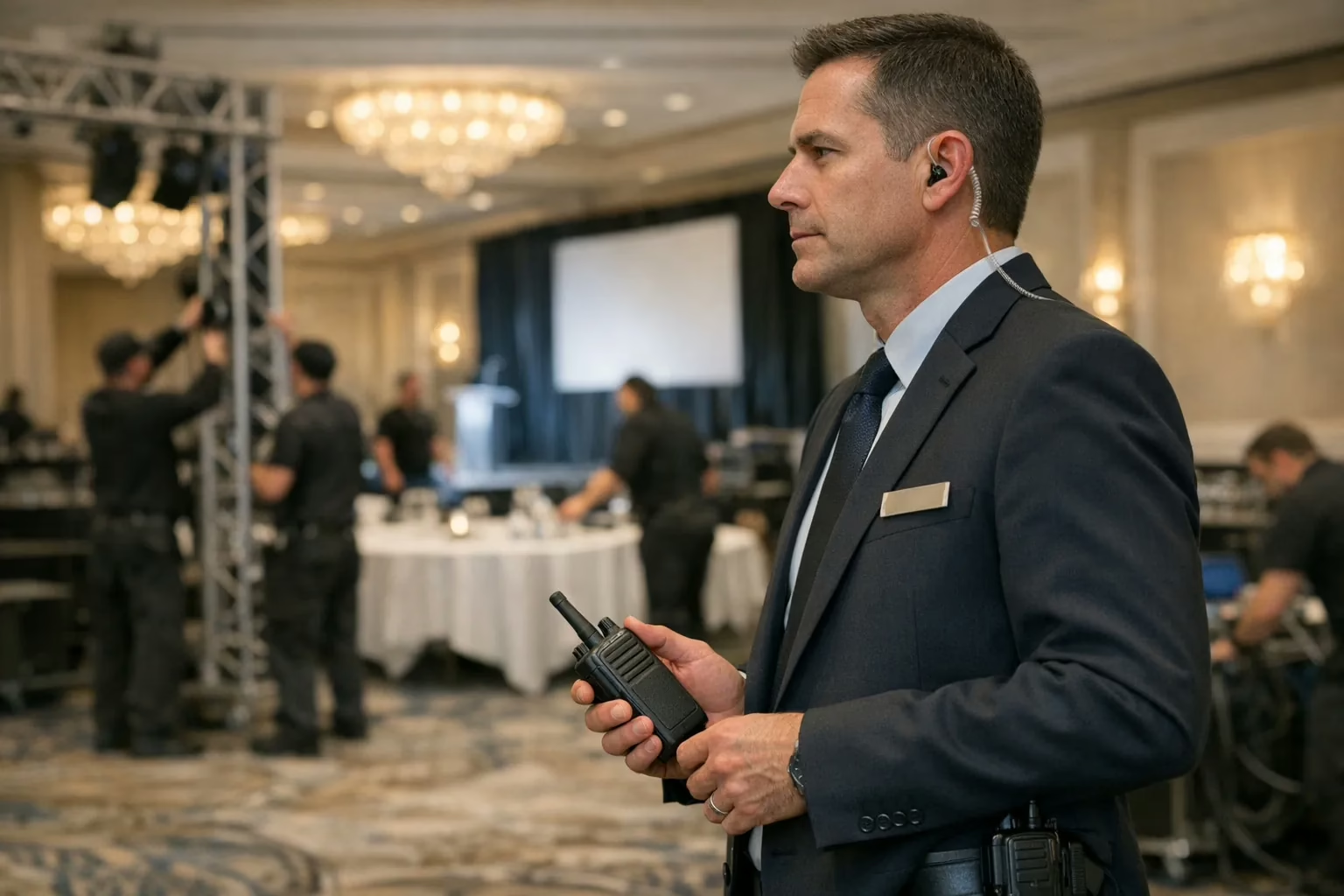
Picture this: a medical situation unfolds on the convention floor. A guest collapses near the main stage. In that moment, your team doesn’t have time to scroll through contacts or wait for a cellular signal to connect. They need to reach security, operations, and a supervisor instantly, simultaneously, and without leaving their post.
That’s exactly the scenario two-way radio systems are built for.
Despite the explosion of smartphones and messaging apps, radios remain the communication tool of choice for hotels, resorts, convention centers, stadiums, and live events. For good reason.
Speed Is Non Negotiable
In hospitality, service delays are felt immediately.
A missed message between housekeeping and the front desk can mean a guest waiting in a lobby with their luggage. A breakdown in coordination between kitchen and banquet staff can throw off an entire reception timeline.
Phone calls require dialing and waiting. Text messages require reading and typing. Two way radios require one button press.
That difference, measured in seconds, adds up to dramatically better service outcomes over the course of a busy shift.
Discretion Is Part of the Service
The best hospitality operations are almost invisible in their coordination. Guests experience seamless service without seeing the effort behind it. That requires communication tools that work quietly.
Radios paired with discreet earpieces allow staff to:
• Receive and relay instructions without stepping away from a guest
• Coordinate across departments without audible chatter disrupting the environment
• Maintain a polished, attentive presence at all times
Whether it’s a front desk coordinator, a banquet captain, or a backstage production manager, discreet communication is the difference between a polished operation and a chaotic one.
Complex Spaces Demand Reliable Coverage
Hotels and event venues are not simple environments. Thick concrete walls, underground service corridors, parking structures, outdoor terraces, and multi building campuses all create dead zones for cellular signals.
In the middle of a peak event, a dropped call is more than an inconvenience. It’s an operational failure.
Professional radio systems are engineered to deliver consistent coverage across every corner of a property. Unlike cellular networks that depend on external infrastructure, a well designed radio system gives your team reliable communication regardless of what’s happening in the surrounding area.
Structured Communication Keeps Teams Focused
When every department is on the same channel, chaos follows.
Housekeeping traffic drowns out event operations. Security updates interrupt kitchen coordination. Staff tune out because the radio becomes noise rather than signal.
Modern digital radio systems solve this with dedicated talk groups, allowing teams to operate in structured communication lanes:
• Guest services and front desk
• Housekeeping and facilities
• Event operations and logistics
• Security and safety personnel
• Production and technical crews
The right structure means every team member hears exactly what they need and nothing that slows them down.
When It Really Matters: Emergency Response
No hospitality or event professional wants to think about worst case scenarios. But the best run operations plan for them.
A medical emergency at a packed concert, a security concern at a hotel, a fire alarm during a conference. These situations require instant, coordinated communication across multiple teams simultaneously.
Two way radios with emergency alert features allow any staff member to trigger an immediate notification to supervisors and security without fumbling for a phone. In critical moments, that capability can be the difference between a fast, controlled response and a dangerous delay.
Signs Your Current System Is Holding You Back
Many operations continue using outdated equipment long past its useful life. If any of the following sound familiar, it may be time to reassess:
• Staff lose contact in parts of the property
• Different departments talk over each other on shared channels
• Coordination slows noticeably during peak periods
• Your team relies on personal cell phones to fill communication gaps
• Emergency communication is informal or undefined
Modern digital systems address each of these pain points, and the return on investment shows up quickly in smoother operations and better guest experiences.
Equipment Is Only Part of the Solution
The right radios matter. Digital audio clarity, lightweight ergonomic designs, extended battery life, and GPS support for large properties are all meaningful features. But hardware alone doesn’t make a communication system work.
System design is equally critical.
Poor channel structure, coverage gaps, and overloaded groups undermine even the best equipment. A professionally designed system ensures seamless property wide coverage, logical department talk groups, and priority routing so urgent messages always get through.
At Whisler Communications, systems are designed around how your property actually operates, not just how many radios you need.
Ready to Upgrade?
If your current communication setup is creating friction instead of solving it, a tailored radio system can change that quickly.
Whisler Communications specializes in hospitality and event communication systems designed for real world operational demands.
Contact us to discuss a customized solution for your property or event operation.