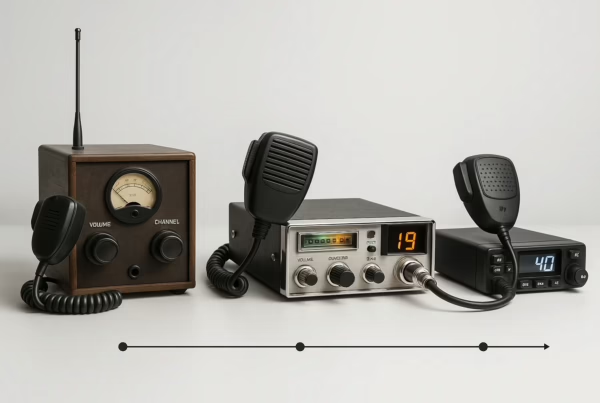
In Washington State, reliable communication is not a luxury. For organizations operating across Olympia, Thurston County, and the broader Pacific Northwest, commercial radio systems are often the backbone of daily operations. Construction crews, utility teams, transportation providers, and public safety agencies all depend on clear, uninterrupted radio communication to stay safe and efficient.
Signal interference is one of the most common issues we see in commercial radio systems across Western Washington. Dense tree cover, hilly terrain, coastal weather patterns, and growing RF congestion all contribute to static, dropped transmissions, and reduced coverage. Understanding how interference occurs and how to prevent it is essential for maintaining dependable land mobile radio and digital radio networks.
Common Causes of Signal Interference in Washington
Signal interference happens when unwanted radio frequency energy disrupts your intended transmission. In the field, this often shows up as background noise, overlapping conversations, or distorted digital audio.
In Olympia and surrounding areas, interference typically falls into two categories.
Internal System Interference
Internal interference originates within your own network. We often trace it back to aging antennas, improperly tuned systems, damaged coaxial cable, or infrastructure that has not been maintained as the surrounding RF environment has changed.
External RF Interference
External interference is increasingly common throughout Washington. New commercial developments, power infrastructure, LED lighting systems, and nearby radio networks all contribute to higher noise levels on VHF and UHF bands. In forested and mountainous regions, signal reflections and terrain shadowing can further degrade performance.
Proven Ways to Reduce Radio Interference in Olympia and the Pacific Northwest
Optimize Antenna Placement for Local Terrain
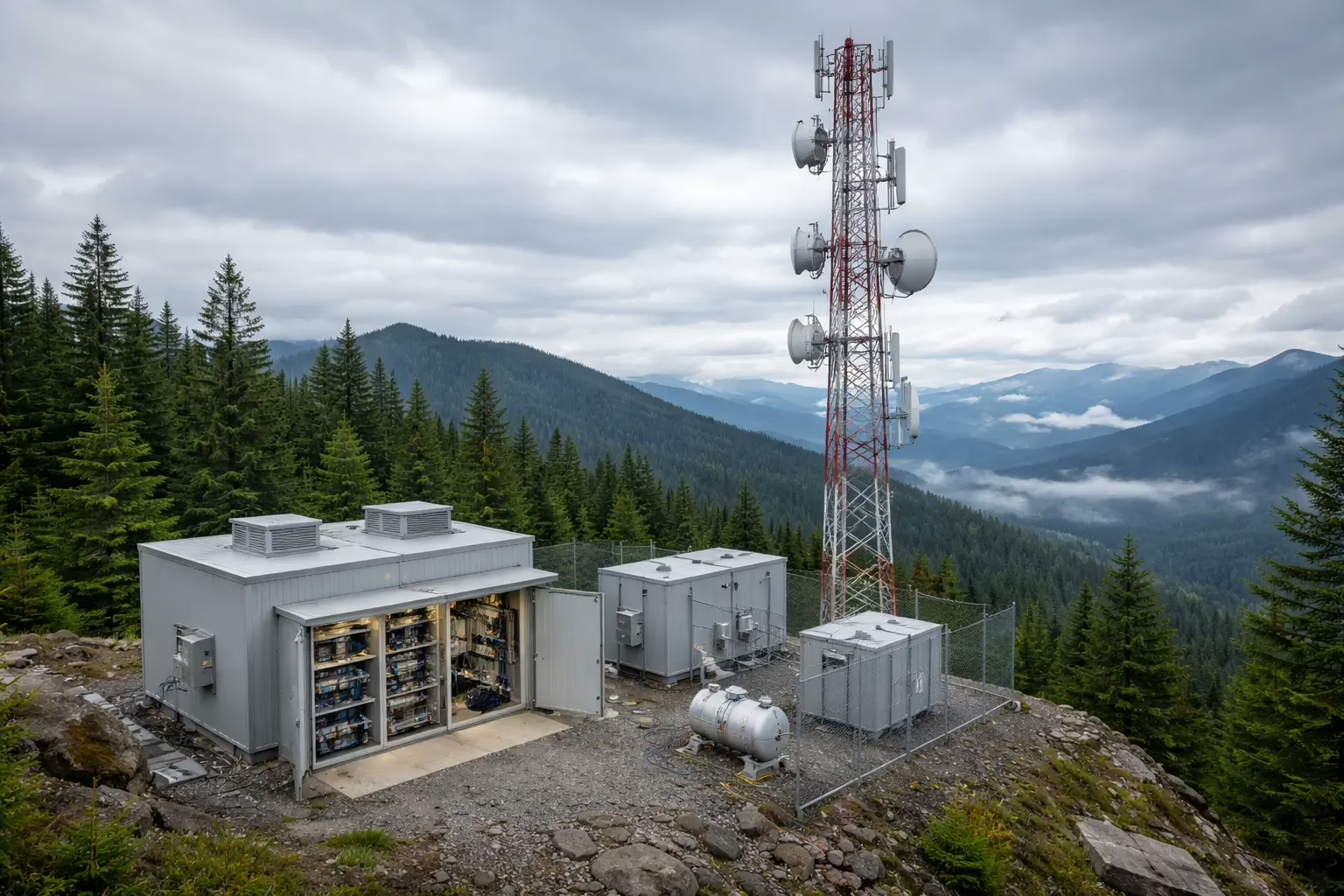
Antenna placement is one of the most important factors in system performance. In the Olympia area, tower locations must account for elevation changes, dense foliage, and coastal weather exposure.
Antennas installed too close together can cause receiver desensitization, where one transmitter overwhelms another. Vertical separation between antennas is often more effective than horizontal spacing, particularly on shared towers.
High quality duplexers and cavity filters are essential in multi system environments to isolate frequencies and prevent unwanted signal bleed.
Maintain Proper Frequency Coordination
As Washington continues to grow, RF congestion increases. Proper frequency coordination and programming of PL or DPL tones, also known as CTCSS or DCS, helps radios ignore unrelated traffic operating on the same frequency.
We regularly see systems that were correctly configured years ago begin to experience interference simply because the surrounding RF environment has changed. Periodic review is critical.
Use Commercial Grade Cabling and Connectors
Weather plays a major role in system reliability across Western Washington. Moisture intrusion, corrosion, and temperature changes can degrade cabling and connectors over time.
All coaxial cable should be properly shielded and rated for outdoor use. Connectors must be sealed, secure, and inspected regularly. Even a small amount of corrosion can introduce noise and intermittent signal loss.
Consider Upgrading to Digital Radio Systems
For organizations still operating analog systems, transitioning to digital radio technologies such as DMR or P25 can significantly improve audio clarity.
Digital systems use error correction to maintain intelligible audio even in the presence of RF noise. While digital does not eliminate interference, it delivers clearer communication deeper into coverage areas, which is especially valuable in Washington’s varied terrain.
Identify and Manage Electromagnetic Noise
Modern job sites generate significant electromagnetic interference. Industrial equipment, data centers, power systems, and lighting infrastructure can raise the local noise floor.
An RF site survey allows us to identify these noise sources and recommend adjustments to base station placement, grounding, and system design to improve performance.
Why Ongoing Maintenance Matters
Preventing interference is not a one time fix. As Olympia and surrounding communities expand, the RF landscape changes.
Professional preventative maintenance typically includes:
• SWR testing to ensure antennas are radiating efficiently
• Receiver sensitivity testing to confirm usable coverage
• Firmware updates for digital radios and repeaters
• Inspection of antennas, cables, and grounding systems
At Whisler Communications, we have been supporting commercial radio systems in Olympia and across Washington State since 1959. Our experience with local terrain, weather conditions, and regional RF congestion allows us to identify issues quickly and keep systems performing reliably.
If your team is experiencing static, dropped calls, or inconsistent coverage, it may be time for a system evaluation.
Contact Whisler Communications to schedule a professional radio system inspection or RF site survey. We help businesses and agencies across Washington improve signal clarity, reduce interference, and ensure reliable communication when it matters most.
Final Thoughts
Clear communication is essential to safe and efficient operations. By addressing interference proactively through proper system design, maintenance, and local expertise, organizations across Olympia and Washington can rely on their radio systems with confidence.