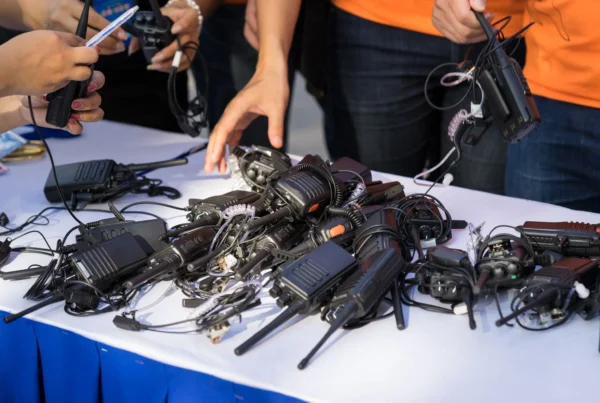
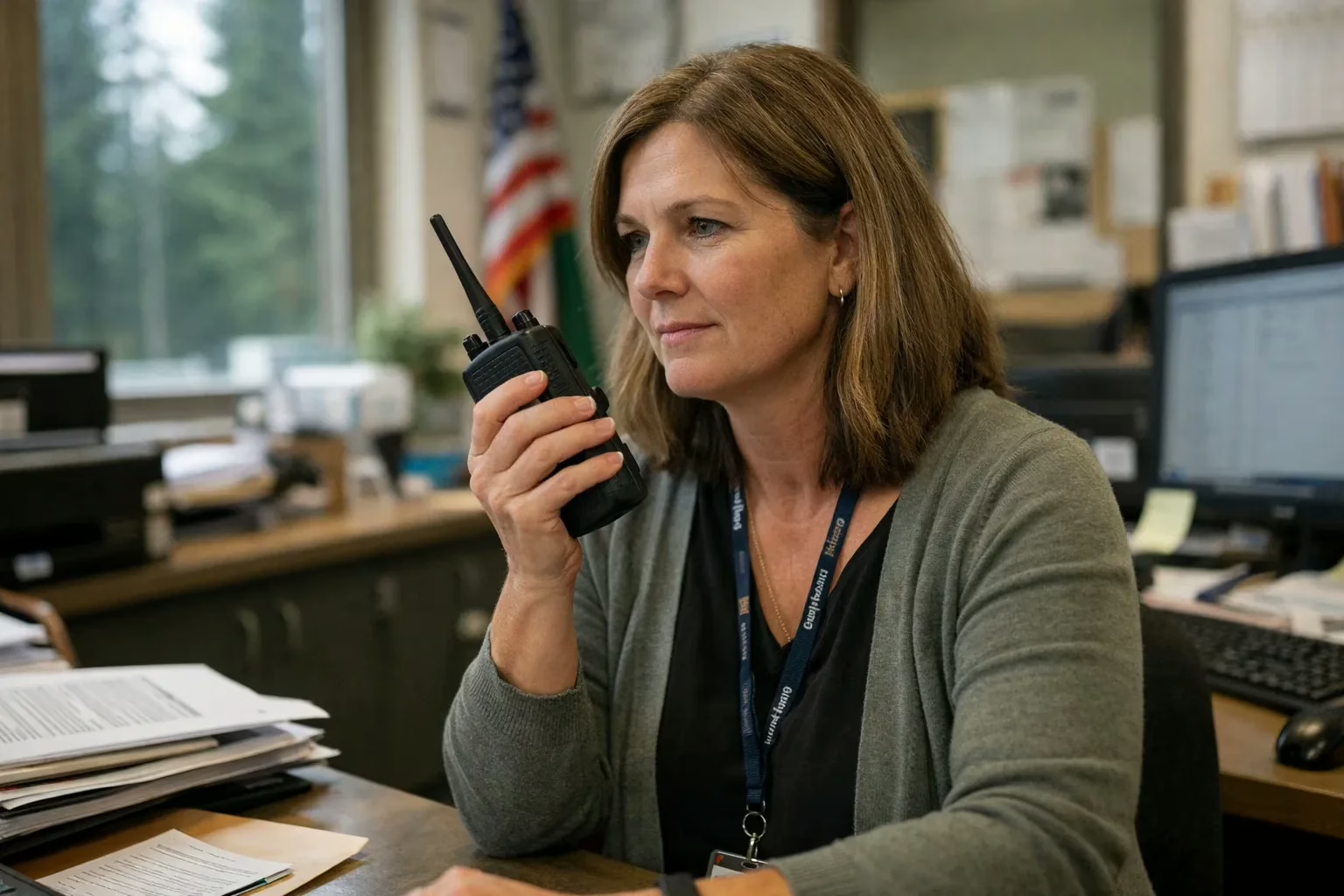
It is 2:15 PM. A lockdown is announced. A teacher in a portable classroom reaches for her cell phone, but the network is jammed. She turns to a walkie-talkie, only to hear static. The front office has no confirmation that her classroom is safe.
Scenarios like this are not hypothetical. During emergencies, cellular networks become overloaded, and consumer grade walkie-talkies often fail inside buildings or across large campuses. These gaps expose a critical weakness in many school safety plans.
Professional school radio communication systems are designed to solve this problem. This guide explains how purpose built two-way radios improve K-12 campus safety, eliminate communication dead zones, and provide instant, reliable contact when it matters most.
Why Professional Two-Way Radios Are Not Just Walkie-Talkies
Consumer walkie-talkies are designed for recreation, not emergency response. Professional two-way radios for school staff are engineered for reliability, durability, and clarity.
Commercial radios are built to withstand drops, daily wear, and harsh conditions common in school environments. More importantly, they operate on licensed business frequencies, giving schools private, secure channels that are free from public interference.
This answers one of the most common questions administrators ask: what is the best radio channel for school use? The answer is a licensed, dedicated frequency designed exclusively for your campus.
A professional system is also engineered specifically for your buildings. Brick walls, steel framing, stairwells, and portable classrooms are all considered during system design. The result is a dependable campus communication system, not a gadget.
Eliminating Communication Dead Zones Across Your Campus
Coverage is one of the biggest challenges for school communication.
For most campuses, UHF radios for school buildings are the best option. UHF signals penetrate walls, floors, and concrete far more effectively than VHF, making them ideal for classrooms, offices, gyms, and basements.
On larger K-12 campuses, even high quality radios benefit from infrastructure support. A centrally located repeater captures weak transmissions and rebroadcasts them at full strength, ensuring consistent coverage from the front office to the football field.
This approach eliminates dead zones in stairwells, locker rooms, and portable classrooms, creating a true campus wide communication solution.Ω
Digital vs Analog Radios and Why Clarity Is a Safety Feature
Coverage alone is not enough. Messages must be heard clearly, especially during stressful situations.
When comparing digital vs analog radios for schools, the difference is immediate. Analog audio degrades gradually with distance, introducing static and distortion. Digital radios deliver clear audio right up to the edge of coverage, even in noisy hallways or outdoor environments.
Digital systems also offer longer battery life, often up to 40 percent more than analog units. This ensures radios remain operational through the entire school day, after school activities, and emergency situations.
Clear communication is not a convenience. It is a safety requirement.
Three Radio Features That Directly Improve School Safety
Modern digital radios include features designed specifically for emergency communication for schools.
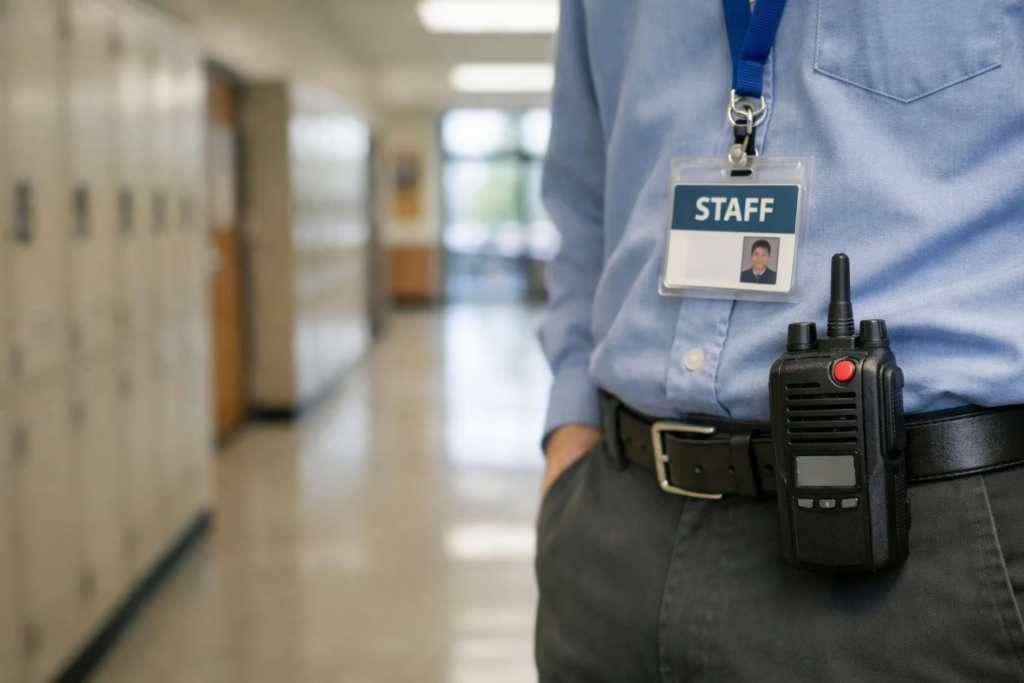
One Touch Emergency Button
A dedicated emergency button allows staff to silently send an immediate alert to administrators or security teams. This is critical when speaking is unsafe or impossible.
All Call Broadcast
Authorized users can transmit a single message to every radio on campus at once. This ensures lockdowns, evacuations, or safety instructions reach all staff instantly.
First Responder Interoperability
Interoperability allows school radios to communicate directly with local police or fire departments during an incident. This eliminates delays caused by relaying information through multiple channels and improves coordinated response.
These features transform radios into active safety tools rather than passive communication devices.
Cost, Licensing, and Long Term Reliability
The cost of a school two-way radio system is higher than consumer walkie-talkies, but it should be viewed as long term safety infrastructure, similar to fire alarms or access control systems.
Professional systems require FCC licensing for educational institutions. This licensing ensures clean, interference free channels and is typically handled by the communications provider.
Durability also matters. Radios must last through full school days, outdoor supervision, bus loading zones, and extracurricular activities. Battery life, charging solutions, and rugged construction are essential considerations.
Key Questions Every School Should Ask a Radio Provider
Before selecting a system, school administrators should ask:
- Can you guarantee full campus coverage, including portables and basements?
- Are the radios digital, and can you demonstrate audio clarity?
- Does the system include emergency alert and all call functionality?
- Can the system communicate with local first responders?
- What is the expected battery life and licensing process?
Asking these questions helps identify solutions that close the communication gaps left by cell phones.
Reliable communication is the foundation of school safety. When seconds matter, staff need instant, dependable contact across the entire campus.
If your K-12 school is reviewing its emergency communication plan or replacing unreliable walkie-talkies, a professional radio assessment can identify coverage gaps and safety risks before an incident occurs.
Whisler Communications has helped schools across Washington design radio systems that work when it matters most.