Fleet communication is a critical operational factor for both utility operators and emergency medical services (EMS). In fast-moving situations, whether responding to a critical power outage or a medical emergency, reliable voice and data connectivity can mean the difference between a coordinated response or dangerous operational delays.
Push-to-Talk over Cellular (PoC) radios represent the convergence of the instant communication speed of traditional Land Mobile Radio (LMR) systems and the vast, high-speed coverage of commercial cellular networks (LTE and 5G). This creates a flexible, next-generation solution that is helping dispersed teams achieve seamless collaboration across wide areas and multiple jurisdictional boundaries.
1. Utility Operations: The Power of Persistent Connectivity
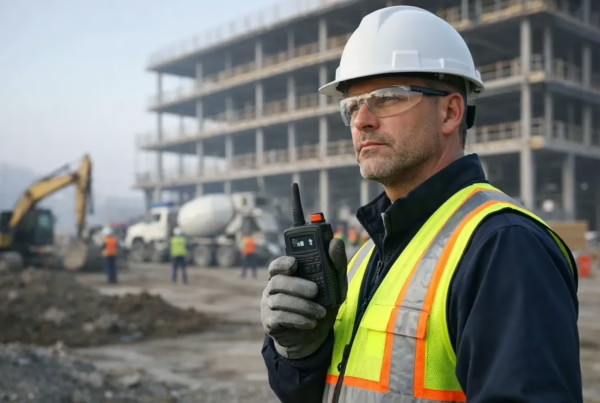
For utilities, the challenge is maintaining critical infrastructure across a huge service territory, often involving deep rural areas or mountainous terrain where LMR signal is inconsistent. PoC radios simplify coordination between field crews, supervisors, and control centers by providing persistent, nation-wide connectivity.
- Real-Time Outage Response: During a major storm event, PoC allows technicians to report completed work, relay system updates, and receive new instructions in real time without returning to a central office or searching for an LMR repeater. The result is faster identification of faults, improved safety, and significantly reduced customer downtime.
- Enhanced Situational Awareness: Integrated data capabilities in modern PoC radios allow for the transmission of asset status, SCADA data, and geotagged images from the field. This improves the control center’s situational awareness, allowing for more informed decisions on crew deployment.
- Simplified Fleet Management: PoC systems enable Automatic Vehicle Location (AVL) services, providing supervisors with a live map view of all vehicles. This allows for optimal resource positioning and efficient routing to distant work sites, which is essential for managing geographically scattered assets.
2. Emergency Medical Services: Speed, Safety, and Situational Awareness
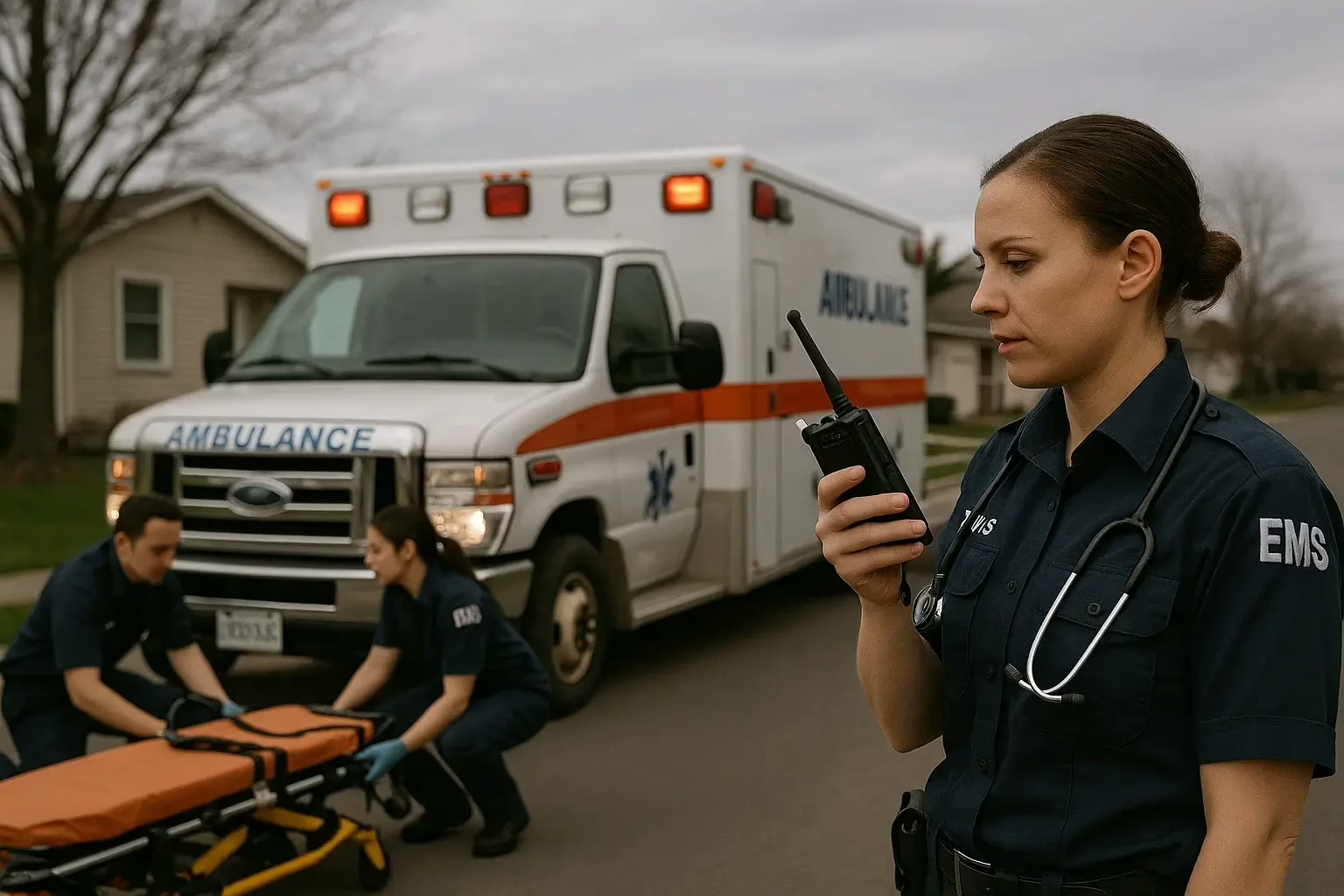
In EMS, the core mission is speed and patient care, both of which are directly impacted by dispatch efficiency and reliable communication during transport.
- Optimized Deployment via AVL: The integrated GPS functionality in professional PoC radios allows dispatchers to see exact, real-time vehicle locations. By directly linking the radio’s position to the Computer-Aided Dispatch (CAD) system, dispatchers can move beyond guessing and instantly deploy the closest, most appropriate unit to an incident. In recent deployments, this capability resulted in an average reduction of 60% in unit assignment time.
- Expanding the Communications Footprint: Unlike local LMR systems, PoC allows EMS units to communicate seamlessly across county lines or large metropolitan areas. That’s all without complex repeater handoffs or interoperability issues, guaranteeing communication continuity during long-distance transports.
- Future Telemetry Data: Modern PoC platforms support data transmission that is robust enough to eventually integrate with on-board telemetry modules.
3. The Strategic Advantage: Hybrid and Data Capabilities
A common misconception is that PoC must replace LMR. In reality, the strategic strength of PoC lies in its ability to augment and integrate with existing infrastructure.
- Hybrid Deployments: Hybrid models are increasingly popular. In this setup, PoC radios supplement existing LMR systems, providing essential redundancy. This ensures communication continuity if cellular coverage fluctuates (LMR serves as the local backup) while leveraging the flexibility and wide-area reach of cellular where LMR signals weaken.
- Beyond Voice Communication: The data transmission capabilities of professional PoC devices are key differentiators. Teams can securely share digital forms, site photos, work orders, or even live telemetry information directly from the field. This capability drastically improves situational awareness for both utilities and EMS, reducing reliance on slow voice descriptions and supporting more informed decision-making.
- Mission-Critical Security: Security and reliability are non-negotiable for mission-critical operations. Professional PoC radios operate on dedicated, encrypted platforms that offer advanced features like group call management, user authentication, and guaranteed Quality of Service features not available in consumer push-to-talk apps.
Ready to Prove the Concept?
Implementing PoC radios can streamline operations, drastically improve response times, and enhance overall fleet coordination for both utilities and emergency services. Organizations adopting these integrated solutions report measurable improvements in operational efficiency, crew safety, and customer service metrics.
The time to explore as a core component of your communication strategy is now. Contact us today to schedule an upgrade for your utility or EMS fleet and see the real-time difference in your operations.