Why FirstNet Matters for Modern Emergency Communications
For public safety agencies and school districts, reliable communication is not optional. As emergency response scenarios become more complex and more data driven, agencies need a network that is built specifically for high priority, mission critical use. That is where FirstNet comes in.
FirstNet is the nationwide public safety broadband network designed to give first responders and extended primary users priority access, even during large scale emergencies when commercial networks become congested. As agencies and schools evaluate FirstNet, one question comes up consistently. How does FirstNet work with our existing two way radio systems?
At Whisler Communications, we help agencies answer that question every day. This guide explains how traditional land mobile radio systems integrate with FirstNet, what compatibility really means, and how schools and public safety organizations can build a unified communications strategy that works when it matters most.
What Is FirstNet and Who Is It Designed For
FirstNet is not a standard cellular network. It is a dedicated broadband network built exclusively for public safety and approved extended users. It operates on Band 14 spectrum and provides priority and preemption, ensuring that public safety traffic moves ahead of commercial users during emergencies.
FirstNet supports advanced applications such as real time mapping, secure data sharing, video transmission, and interoperable voice services. Eligible users include law enforcement, fire, EMS, utilities, transportation agencies, and designated school safety personnel.
How FirstNet Differs from Commercial Cellular Networks
Commercial cellular networks are shared with the public and operate on a best effort basis. During disasters, congestion often limits their effectiveness. FirstNet is engineered specifically to avoid that problem by prioritizing public safety traffic and expanding coverage into rural and remote areas that are critical for response operations. Security controls are also tailored for public safety use rather than consumer data protection standards.
Understanding LMR and FirstNet Integration
One of the most common misconceptions is that FirstNet replaces traditional two way radio systems. In reality, FirstNet is designed to complement and extend land mobile radio, not eliminate it.
LMR remains the backbone for mission critical voice communications, especially for on scene and local operations. FirstNet adds wide area broadband data and interoperable voice capabilities that extend beyond the limits of traditional radio coverage.
Can Existing Two Way Radios Work With FirstNet
Traditional two way radios operate on licensed radio frequencies, while FirstNet operates on broadband spectrum. They do not directly communicate with each other without integration. This is where interoperability gateways and hybrid devices come into play.
Interoperability solutions allow LMR users to communicate with FirstNet devices such as smartphones or PoC radios, through managed gateways. Agencies using advanced multi-band radios, including Kenwood Viking portable radios, often already have the foundation needed for seamless integration between LMR and LTE based systems.
FirstNet Devices and Rugged Radio Options
While FirstNet supports standard smartphones, many agencies and schools choose dedicated FirstNet capable rugged radios for operational use. These devices combine traditional radio ergonomics with broadband capability, allowing users to maintain local voice communications while accessing wide area data, applications, and interoperable voice services over FirstNet.
This approach gives agencies flexibility without sacrificing reliability or familiarity for users in the field.
FirstNet Considerations for Schools and Educational Campuses
Schools face unique challenges when it comes to emergency communications. Coordination with local first responders, internal security teams, and administrative staff must be seamless during critical incidents.
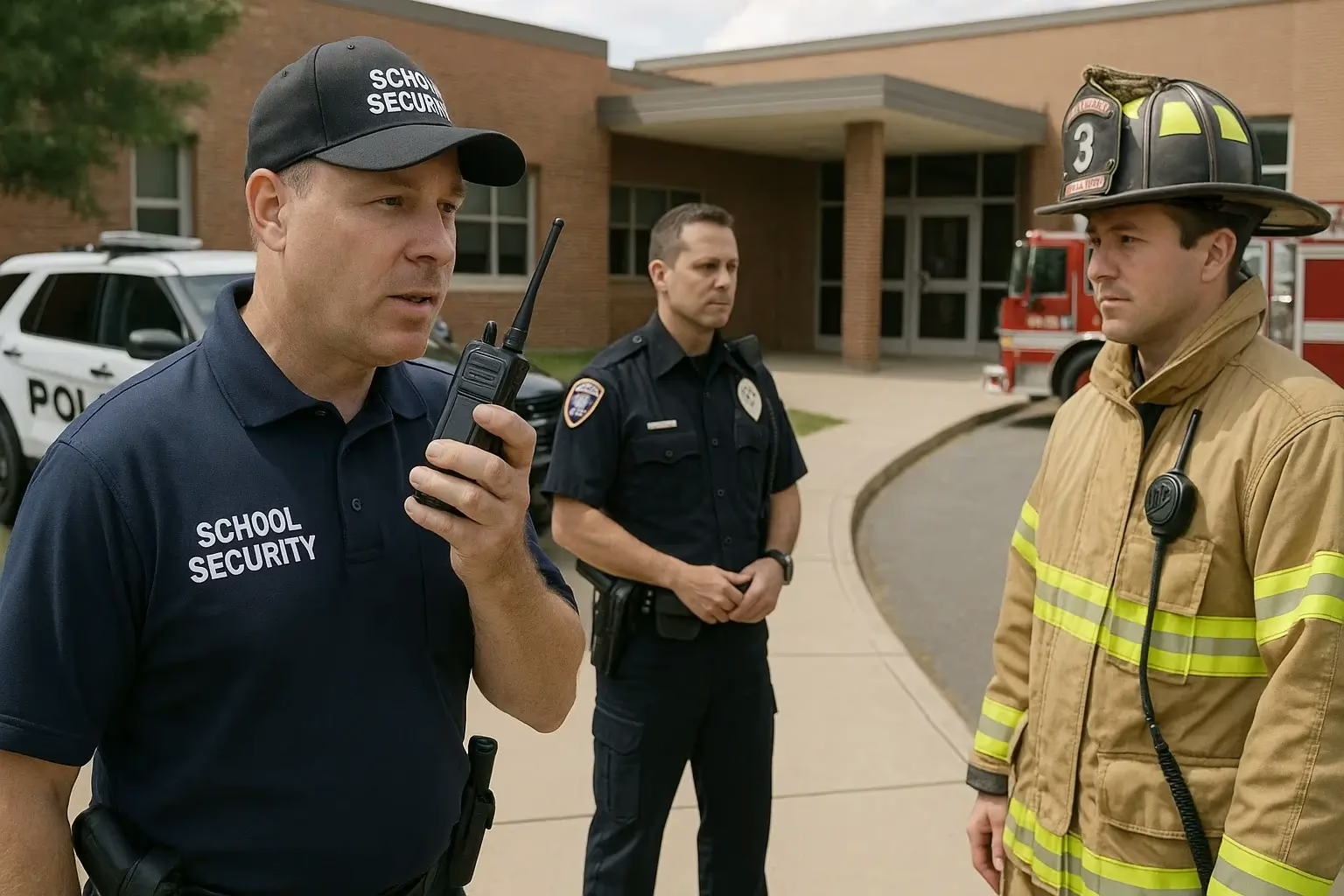
Eligible school personnel can access FirstNet as extended primary users. This allows school security and administrators to communicate directly with police and fire agencies, access real time facility data, and maintain internal communications even if commercial cellular networks fail during an emergency.
Interoperability and Shared Communications During Incidents
Interoperability is not about scanning radio channels. It is about ensuring that all responding agencies and campus stakeholders can communicate on shared channels when necessary. A FirstNet integrated LMR system enables secure, managed interoperability across jurisdictions and disciplines. For schools, this means direct access to public safety communications during an active incident, without relying on ad hoc or manual workarounds.
Planning a Successful FirstNet Transition
FirstNet integration is not a plug and play deployment. The most effective implementations follow a structured approach.
The first step is assessing existing radio systems, coverage, and operational needs. Next is designing an integrated solution that combines LMR, FirstNet devices, and interoperability tools. Finally, proper deployment and training ensure that everyone, from dispatch staff to school security teams, can use the system confidently under pressure.
Partner With Whisler Communications
FirstNet radio compatibility is about more than hardware. It is about designing a communication ecosystem that supports real world operations. At Whisler Communications, we specialize in helping public safety agencies and schools integrate FirstNet with their existing radio infrastructure in a way that is reliable, secure, and scalable.
If you are evaluating FirstNet or have questions about how it fits into your current communications strategy, our team is ready to help. Reach out to Whisler Communications to start the conversation.